| OCR Text |
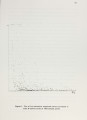
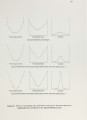
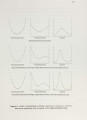
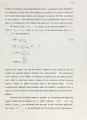
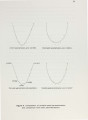
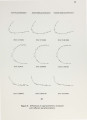
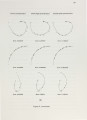
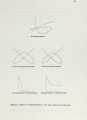
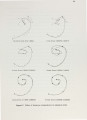
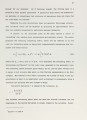
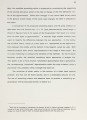
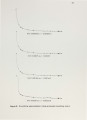
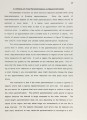
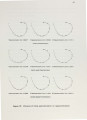
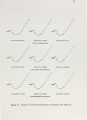
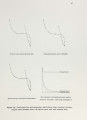
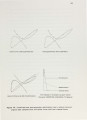
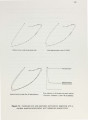
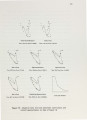
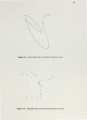
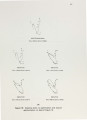
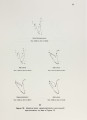
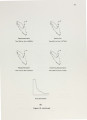
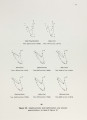
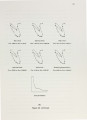
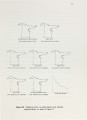
Show 42 tially, the modified smoothing spline is produced by constraining the magnitude of the second derivative, which is the rate of change of the first-derivative vector of the approximation. While slow changes in this vector tend to be visible in the general overall shape of the curve, rapid changes are seen in undulations and loops. A comparison of the proposed smoothing metric and the jump criterion on data taken from the function f(x) = [ x, 1/x ] and parametrized by chord length is shown in Figures 8 and 9, for values of the fit parameter that result in a similar error for both types of approximation.* A relatively large number of knots were used, to magnify the differences between the two approaches. In the normal use of either metric, values of p very close to 1, represented by the approxima-tions between the middle and the bottom of the diagram, would be used. Both methods produce fairly similar approximations in this range in many cases. But it is also interesting to compare the extremes of the methods. As the fit factor becomes smaller, the modified smoothing spline approaches a straight line. This seems to be a more intuitive "smoothest" approximation than a polynomial, the corresponding "smoothest" approximation under the jump criterion, since a polynomial may undulate, while a straight line does not. The minimizer of either metric is the solution of a linear least squares problem, and thus can be found quickly, and in a predictable amount of time. The use of smoothing metrics and adaptive knots to produce a smoothing ap-proximation will be discussed further in section 3.3 . • Note that for purposes of comparison the domain of both fit factors has been mapped to (0, 1). instead of (0, ao), which Oierckx uses. Also. since the metrics minimize different quantities. distinct values of p must be used for each to produce approximations with the same error. |