| OCR Text |
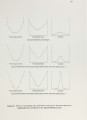
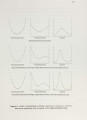
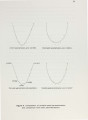
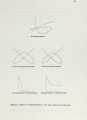
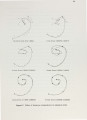
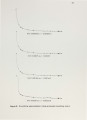
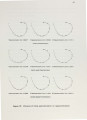
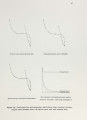
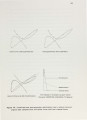
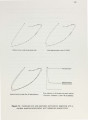
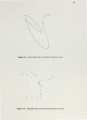
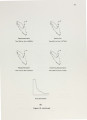
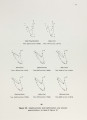
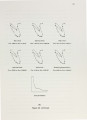
Show 33 places a floor on the error that is significantly larger than zero, and will not be reduced in any number of iterations. Compared to many real approximation problems, this is a simple case. It is important to note that reparametrization may be quite useful for correcting the order of a set of data points, if only a few are out of order, but it is difficult to predict the results on more complicated problems. The author investigated several approaches to enforcing the order. Early methods were only required to preserve values which were in order. A simple method. which sorts the parameter values in nondecreasing order, satisfies this constraint. But this is not the best that can be done; the most successful method preserves the maximum amount of new information contained in the new parametrization. Consider data sampled from a curve which turns back on itself in a narrow loop at one end. This original curve can only be reproduced because the ordering of the data points is known. Initially, the loop may be approximated by a section of a curve which does not loop. Reparametrization results in a new set of parameter values which are generally increasing, except for those at one end, which start decreasing. Note that the parametric intervals, i.e., the differences between the parameters t given to consecutive points, are probably good estimates, but simply have the wrong sign. The solution is to find the minimal region(s) in the list of parameters over which the parameters are out of order, which can be determined by comparing the parameters to a list of the parameters which has been sorted. Any elements in these two lists which do not match one for one are elements which are out of order with respect to some other value in the list. All parameter values in this region are then changed, so that the relative lengths of the parametric intervals are preserved, while also scaling all of the parametric intervals within that region down by a single factor, so that the parameter values outside of that region will not have to be changed to make the parametrization nondecreasing. By making the most of the new information gained from |