| OCR Text |
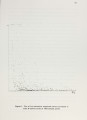
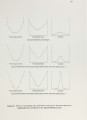
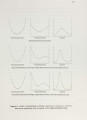
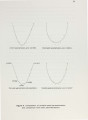
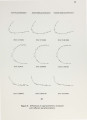
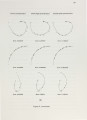
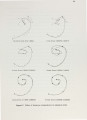
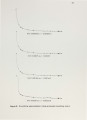
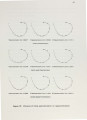
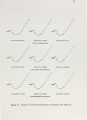
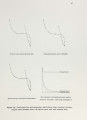
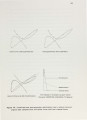
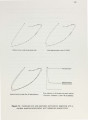
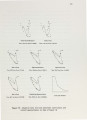
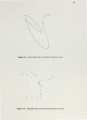
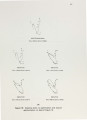
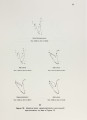
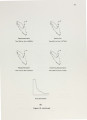
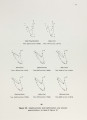
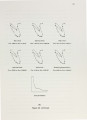
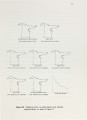
Show 48 imum which is not the global minimum. By using a variable speed parametriza - tion as the initial parametrization, however, reparametrization seems to work well in a variety of circumstances. 3.2 Effects of Initial Parametrization on Adaptive Knots Having a good initial parametrization is especially important when adaptive knot placement techniques are used. Although the influence of the parametrization on the knot selection process is reduced by using the true dis-tance estimates rather than the pseudo-distance, the parametric approximation used in selecting new knots must still depend on the parametrization. A good parametrization reduces the number of knots required in an ap-proximation that fits a set of data points within a specified error. Reparametrization is not very useful until most of the knots have been added; it does not tend to improve the shape of the approximation if there are not enough degrees of freedom in the approximation. Once the knots have been added, of course, reparametrization will reduce the error of the approximation and usually improves the shape, but if the goal is compactness, it is preferable 1r that unnecessary knots are not added in the first place. The only way to insure this is to use a good initial parametrization. Figure 1 1 shows a comparison of adaptive knot selection using three dif-ferent parametrizations for the same data. The resulting knots are very dif-ferent, since the error of the approximation over a subset of the data points is not purely a function of whether there are enough knots in that region, but is also affected by the parametrization. Thus adding a knot in that region may not reduce the error significantly, until enough knots are added that the data is in-terpolated. In particular, the uniform parametrization results in such a poor fit that the ill One could remove some knots; the most serious difficulty seems to be deciding which ones to remove, and how to change the other knots to compensate for their removal. |