| OCR Text |
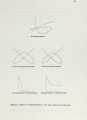
Show 13 Another useful approach requires that the user specify an acceptable error, but the results will be counterintuitive unless this parameter has a clear relationship to the perceived closeness of the approximation to the data. In computing the error of an approximation f, it is common to use the pseudodistance, the distance from a data point with parameter value t. to f(t .). While it I I is an inexpensive upper bound on the actual error, a curve could pass exactly through the data points, yet still be classified as a poor fit if only the pseudo-distance is considered. The true distance is that from the point to the nearest point on the curve f, which is usually not at t .. Use of the pseudo-distance I makes parametric least squares a linear problem, but in analysis of fit, and comparison of approximating curves, the true distance seems more appropriate."' 1.4 Research Goals The data with which the designer is faced typically is not ideal, either in terms of accuracy or uniform spacing; hence he is forced to compromise. Traditionally this has required intense interaction with pieces of mathematical software, or interactively specifying the curve without analytical software, using visual, nonquantitative criteria to judge the fit. This is the motivation for reduc-ing the interaction required to produce "nice" fitted curves from digitized data, although not too poorly digitized. The goal of this research has been to develop an integrated spline-based approximation process. Certain aspects of this problem had already been thoroughly researched, but it has been necessary to integrate these results into a coherent process, specializing them for the design approximation problem, and drawing on the strengths of the different methods. One goal has been to automate detection and placement of corners, parametrization, knot selection, and weighting of the data points, thus freeing the user from the chore of handtuning a curve to fit the shape of a set of data. With the development of * It will be shown to be useful in other applications as well, in section 2.3. |