| OCR Text |
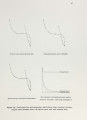
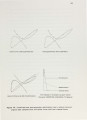
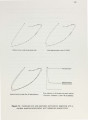
Show 2.3 The Role of True and Pseudo- Distance in Automatic: Approximation 36 The computation of the error of an approximation has been an important factor in the comparison of various algorithms that could be used In automatic generation of an approximation. It became apparent quite early that methods could not be compared solely on error estimates based on the pseudo-distance, since many approximations for which this error was large "'looked'" better than those with small errors. This is not surprising, since the pseudo-distance, defined as di = II f(ti) - c:i 11. is merely an upper bound on the distance from the point to the approximation. The algorithm used in reparametrization * to find a point on the approximating curve which is locally nearest a data point, can also be used to compute more accurate distance estimates. The implementation of this algorithm and its applications will be discussed in greater detail in this sec-tion. 2.3.1 Effect on Adaptive Knot Placement Techniques As well as being useful for comparing methods, the true distance can be used to improve the performance of heuristic approaches to adaptive ap-proximation, by providing additional information that can be used in making better guesses. One such method is adaptive knot selection, which relies on heuristics to repeatedly place knots in regions where they will contribute to the ability of the approximation to smoothly approximate the data, until the error of the approximation satisfies some error criterion. There is evidence to attest to the difficulty of estimating optimal knot locations without actually trying them [ 19], but such methods are quite fast, and can be useful when speed is a higher priority than finding the minimal knot set. Common heuristics are placement of new knots in regions of a curve in which the L2 error is large between consecutive knots [6, 41 or at the parameter value of the point which is the • See section 2.2. |