| OCR Text |
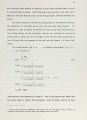
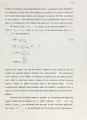
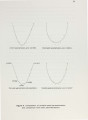
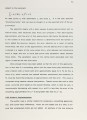
Show 34 reparametrization, it is much more likely to pull an approximating curve into the right shape. 2.2.2 Distance Minimization The Newton-Raphson iteration, as presented in Plass and Stone's paper, will not always find the nearest point on the curve. The goal is to find the value t; that minimizes the least squares error function e(t) = llf(t)-cill2, for an approximating curve f(t) and data point ci. In vector notation, the step is: e'(t;) t . ~ t . - -- 1 I e"(t.) I < f(t .)-c., f'(t .) > I I I ti- -<-f-'(-t;-),-f-'(-t;-)> _+_ _< f_(t-;)---C-;,-f-"(-t;-)>- ... Unfortunately, if the second derivative of e at the initial value of t; is negative, t will change in a direction which tends to increase e(t), since the local quadratic model has a maximum rather than a minimum. First taking the absolute value of the denominator before computing the new step is a simple and effective solution, although other strategies could be chosen [5]. The convergence of Newton-Raphson is also improved by application of Marquardt's modification, discussed in greater detail in Dennis and Schnabel [5]. 2.2.3 Final Method Once ordering is enforced, and the Newton-Raphson iteration is imple-mented with the above modifications, reparametrization produces reasonable results. A reparametrization algorithm has been implemented, which can be ap-plied to space curves as well as planar curves, as curves and contours in modeling cannot be assumed to be planar. The data is approximated by a single B-spline space curve rather than a sequence of distinct polynomial segments; the approximation is no longer required to interpolate selected data points, and no tangent estimates are required. * This is actually a more general form than that presented in Plass and Stone. but I believe this notation is clearer. |