| OCR Text |
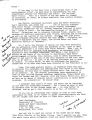
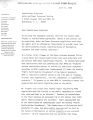
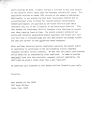
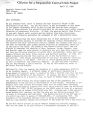
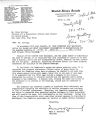
Show r & ; O X. could be costing us "between $163-62 per acre-foot of water per year and $339.31 •' per acre foot, we are now looking to the State to develop alternative water management opportunities. These include the cheaper utilization of available and wasted water in the Bonneville (Salt Lake) Basin and in the Uintah Basin. These include introduction of widely accepted water conservation practices for water use by municipalities, by industry and by irrigators. It is well known that introduction of new plumbing fixtures in the homes - for toilets, showers and faucets - combined with leak repair can cut residential use by 36-63%. Reforms in outdoor water use by homeowners, which is some k0% of their water supply, is needed in semi-arid parts of the country. Utah's problem is not one of lack of water, it is one of inefficient use of water that is readily available. As citizens concerned about our energy situation, we cannot support a water development Project which is to remove some 60,000 acre feet of water from the Uintah Basin/Colorado River sources - where oil shale development is underway and requires sizable quantities of water - and transport this water across the State to the Bonneville Basin where it is not needed. CUP planning took place before our energy situation became acute. So it doesn't meet present Utah needs. As Utah citizens who enjoy outdoor recreation associated with fishing rivers and wildlife in the Uinta Mountains in northeast Utah, we cannot support a Project which destroys a significant amount of these resources which also support an important economic base in our State. We believe it is wholly out of step with the Administration budget cuts to have already existing fish and wildlife resources destroyed for unneeded water development and then to spend millions of dollars substituting other reservoir recreation resources. We already have more than enough reservoir recreation in the State, so again, the CUP does not meet our needs in replacing already existing and desirable recreation. Mr. Chairman, you should be aware that support for construction of the CUP was based on use of Indian water and deferral cf use of that water by the Uintah and Ouray Indian Reservation Tribe. As a condition for use of this water, the Ute r-eople were promised certain mitigation and ultimate compensating • projects. Only one or two have been either completed or started and the Ute Indian Ute Final Phase, has been dropped. To date, equitable treatment of the participating Indians has not taken place. It has been delayed for non-Indian purposes in the development. The CUP projects in the Uintah Basin, even if completed, will not fulfill needs for livelihoods of the Indian people on their Reservation. An earlier Uintah Irrigation Project, started in 1906 primarily for Indian improvement of their arid land, has not been continuously funded by Congress and has fallen into disrepair. The Uintah Irrigation Project rehabilitation is one of several important and cheaper water management options needed for Reservation occupancy. Other answers than proposed CUP projects must be considered. We would like to inform this Committee, that even with projected funding for CUP completion of a Project which we can do without, there is no guarantee that costs projected in a new Repayment Contract will be sufficient. Individual parts of the entire development have consistently had cost-overruns primarily due to unolanned for and unmanageable geologic conditions. In the fall of 1977 (September l) the epicenter of an earthquake was located only 25 miles from the proposed Upper Stillwater Dam. This is the key dam in the transbasin diversion to the Bonneville Basin. Residents in the city of Dacheme, below the proposed damsite,are very concerned about their safety if this dam is completed. The Committee should recognize that serious inequities in taxing Utah citizens Vov CUP repayment have resulted in, and continue to treduce,opposition to repayment. Salt Lake City residents will pay oO'l of the casts oi" CI? wat.pr and will receive onlv 20$ nroduced. Residents of D .esne Ccimly are taxed * A number of tremors were noted over several davs, as fa: around h.S on che Riehter Scale iwav as lr50 mile: |