| OCR Text |
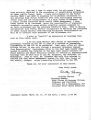
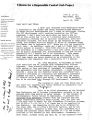
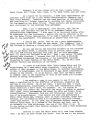
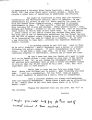
Show 3. - at times of Agency planning, Conservation Groups should be prepared to contribute immediately, some position statement on which the Agency can base its planning. This is to counteract imbalance of input on issues. Local people seeing jobs at stake, or jobs to be had, view resources in an entirely different light than does the biologist or the conservation group concerned with riparian biota, wilderness, or Wild and Scenic Rivers. And locals, along with their State representations, are the first and most vocal and most numerous in letting their positions be understood by the Agency. Environmental Groups respond perfunctorily, if at all, to early-on planning. They come on in formidible strength when the Land Use Plan or the EIS sits before them - its premises largely formulated, its broader perspectives missing. The recourse then, is one of criticism or attack. (See two examples at conclusion.) 5. Groups concerned about the Colorado River Basin resources and how these will be used or protected, need to articulate, at some level of operation, their position, premises, and avenues of action. They need to do this allowing for diversity of goals. They do not need to lay before the world their "top secret strategies" ; rather formulate the comprehensive nature of the problem and determine the options. They need to do this specifically on this Basin issue - as background for local environmental group participation in early planning stages of Land Management Agencies. Local groups do not lay before Agencies everything they know at early stages of planning, but their input early-on will inform the Agency and Federal and State administrations that they have a position, and they plan to support this throughout the Agency planning and implementing procedures. - as help to local Group efforts in assembling needed and relevant information to sustain their efforts. - as guidance to local Groups in planning their own strategies - to maintain continuity of effort; to shorten the "learning process" experienced by new members; to avoid independent or false starts which will be unproductive; to give local effort some perspective in the comprehensive problem; to incorporate "pet" projects into the larger effort. (One individual in Utah familiar with the geology and biota of the San Rafael Swell, drew up a management boundary, presented it with stipulations to the BLM, and threatened to "get the Swell area under the Park Service" if the BLM didn't control ORV use and destruction. The same individual is studying unique amphibian resources in desert pockets in Utah.) 6. Last, but perhaps more important, a Coalition can develop a position on alternatives which can be presented: on water supply options; on conservation options specific to the area; on the relative "need" of an energy proposal in the perspective of how much we need, from what resource area first, for whom, where. |