| OCR Text |
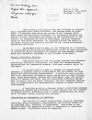
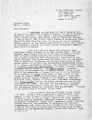
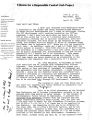
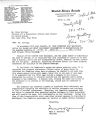
Show Citizens for a Responsible Central Utah Project April 17, 1980 Mountain States Legal Foundation 1825 Sherman Denver, CO 80203 Dear Sir/Madam, As you probably know, water is perhaps the most essential factor in the development of the West. Yet the key factor in the development of this water is the Federal Government which is able to fund the massive water Dro.iects. Costs of tnese projects are partially paid back by the water users-often throuqh formation of conservancy districts. In Utah, the massive Central Utah Project is one such federal water project and the Central Utah Water Conservancy District was formed to guarentee the repayment of CUP's construction costs. We are convinced that the Water Conservancy Act of Utah (enclosed) is unconstitutional basically because it provides for taxation without representation. The Central Utah Water Conservancy District (CUWCD) was created under this act. The Utah law provides that judges appoint directors of conservancy districts. In the case of the CUWCD, the judges of the Fourth District Court, who are elected to represent the counties of Utah, Duchesne, Uintah, Daggett, Juab, and Wasatch, make the appointments of directors not only from those counties but from the following counties not within their jurisdiction, namely Salt Lake, Summit, Millard, San Pete, Piute, Sevier, and Garfield Counties. In 1979, the CUWCD collected $5,350,489 from counties not in the Fourth District Court jurisdiction. This amount represented 80fo of the total ($7,938,143) collected from all counties in the CUWCD. This tax is levied against private property as well as commercial and industrial property. In 1979 the CUWCD increased the tax levy without a public hearing. It may be 1995 before any water is delivered from the Project. Additionally, this law permits the formation of a water conservancy district in an irregular manner. A different number of petitioners representing a given amount of property value is required to form a district than that required to protest the formation of the district. Of course, the law is written in favor of formation of a district, thus, in favor of Federal water projects. The Central Utah Project has broad support but few of the supporters are knowledgible in the politics or the economics if the Project. Advocates of the Project imply that without the Project there will be severe water shortages (many and varied experts disagree with this) which naturally sway the uninformed. On December 14, 1965, 30,657 residents of the CUWCD voted in favor of a contract of repayment not to exceed $130,673,000 plus 20%. Although only 2,205 residents voted against this contract, we feel the vote was set during an awkward time in order to discourage anti-sentiment. The Bonneville Unit of the CUP (one of six units) now costs in excess of $800,000,000-if completed by 1995. The exceeding of the repayment contract limit is going to necessitate another vote on a new contract (unless the Directors of the CUWCD can find a way around it) We see this entire process as one of Federal bureaucracy building projects that are not shown to be cost effective (independent assessment of the CUP's |