| OCR Text |
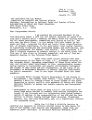
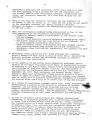
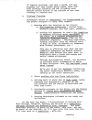
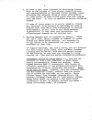
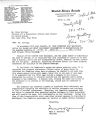
Show 4. - To be effective today, I think that environmental Groups must be able to present - to Agencies at early stages of planning, for Land Use Plans, in comments on EIS's, at public hearings and meetings, and in their own Group discussions - the alternatives in proposed developments where alternatives are applicable, feasible, justifiable, obtainable or worth fighting for. We have not emphasized or advocated alternatives effectively enough heretofore. So the label "obstructionists" is an albatross in our efforts. I am continually dumbfounded by Wisconsin efforts to develop conservation alternatives. The spirit of innovative enterprise is exhibited from farmers, businessmen, and backwoodsmen up North. Even State legislators are joining up with national pleas .for conservation. Yet, in spite of this, the Federal beauracracy seems to have lost touch with this localized free enterprise endeavor - in gearing into massive synfuel and oil shale developments. Let's explore a Colorado River Basin Coalition operation from the perspective of these views. They represent needs I recognized working in the west; they represent needs other people shared with me. As you can see from my letter to Gene Day, Manager Moab District, BLM, Utah, I have already started the ball rolling. The BLM and Forest Service are confronted with enormous development conflicts in the heart of a Colorado River Basin area once considered by Secretary Ickes for an 8,000,000 acre National Park. World War II diverted attention from such a proposal and today, not one half a million acres remains unimpaired. In the changed world of more people and energy problems to be met, the continuing existence of canyons, cliffs, colorful rock forms, arches, natural bridges, fossilized river beds, their hanging gardens, the biota of arid land and floodplain and warm water stream flows, the extensive Anasazi heritage of the Grand Gulch area - all will be challenged - piece by piece - for the mineral resources which underly so much of the area. And the key to much of it - what survives and what is mined - is the water in the Colorado River. A more informed environmental citizen must be in on the action today. But he must be present where his knowledge can be heard at stages when it must be heard. And he must be prepared to propose alternatives and options - for jobs, projects, mineral resources or methods of obtaining them, community water conservation since the natural resources warrant seeking such options. Do consider the establishment of a Colorado River Basin Coaltion - as proposed in my two communications, or as you see the value. I look forward to hearing from you soon. Dorothy Harvey |