| OCR Text |
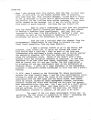
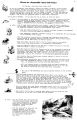
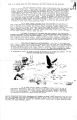
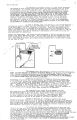
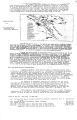
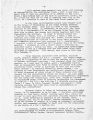
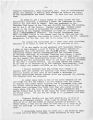
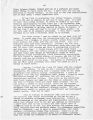
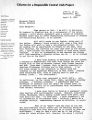
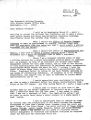
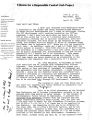
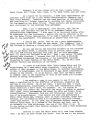
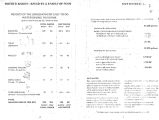
Show WHAT IS THE CUP? An objective of the State of Utah is to keep Utah's guaranteed entitlement to Upper Colorado River water within the State boundaries for its growth and development. It Is feared that water left flowing down the Colorado River will be developed by Arizona and California, first. The Central Utah Project is a Bureau of Reclamation p1an to transport water flowing from the South Slopes of the Uinta' Moufrt"aT"ns~inito~~th~e~Green River and Colorado~Rlyer Basin, out 6T~that Basin across the mol!nTaThTH^"Th~e" Bonneville BasTrTi The Salt Lake Valley is The~horthern portion of thXs~Baslri. When the" CUP was conceived 60 years ago, this was considered the center of the State's development needs. For purposes of this 100 mile transbasin diversion, water needs of Duchesne County and the Ute Tribe, in the Uintah Basin, were ignored or usurped by a "Deferral Agreement" with the Tribe. As a consequence, the plan is to store and distribute water from remaining streams on the South Slopes of the Uintas for purposes in the Uintah Basin. In order to develop, fund, and construct a plan of this magnitude involving all mountain streams and their tributaries on the southern and western portion of the Uinta Range - the CUP is organized in six Units. Four Units were authorized in 1956 for construction by the Colorado River Storage Project Act: the Bonneville, Upalco, Vernal, and Jensen Units. The Uintah Unit was authorized in 1968 by the same Act. The Ute Indian Unit was also approved for feasibility investigation by the 1968 Act but has not been authorized for construction. Vernal, and Jensen Units. The Uintah Unit was authorized in 1968 by the same Act and is primarily for Indian Reservation needs. The Ute Indian Unit was also approved for feasibility investigation but the 1968 Act but has not been authorized for construction. This Unit, using Green River water, will develop various alternatives to provide water throughout the State of Utah. ±* ' O • V r yi Bannovllla Unit Upalco Unit / r- Uintah Unit / r- Vernal Unit / / r-Jen&an Unit n , J ^ , The dominant Unit, the Bonne vi 1 le 7 nrovl dimT~wlLte"r" r^\\^c Bonn7vTifW Basin, is being developed in Systems - Irrigation, Municipal and Industrial (Mil) and \y>\ . he. !^an Presented t 0 the public in the Final Environmental Impact Statement of l ^ ^ f - ^ M ^ ^ ^ 1 ^ ^ ^ ^ ^ ^ ^ ^ ^ ^ ^ ^ irrigation) to the Jordlntlle rLA_I_Sxsteim through diking two marshes on Utah Lake. ,,<^ 4 ^c ™. Wa^er w i l 1 b e suPPlied the Strawberry Collection System from withdrawing 136,000 acre feet of water annually out of Rock Creek on the South Slopes of the Uintas and transporting through the mountains to Utah's southwest. Rock Creek is a major, high quality trout stream which flows into the Green. Its wilderness canyon would be dammed for storing reservoir water for transfer. In addition to Rock Creek, the west Fork of the Duchesne River, Hades and Wolf Creeks, and Currant Creek will be dewatered. All are valuable Class I & II trout streams. With the exception of a very minimum flow in Currant Creek, these streams will be destroyed The Jordanelle M & I System Involves damming the Provo River some seven miles above already existing Deer Creek Reservoir for Municipal and Industrial water to Salt Lake Valley. Stored water in Deer Creek Reservoir, a Corps of Engineers project, is only k0% utilized. Since Kennecott Copper, the major industry in the valley, has sufficient water for Its needs, this begs the question of who will be the buyers of the costly industrial water? Jordanelle Reservoir sill inundate a pastoral farm valley nestled in the Uinta foothills, a major highway, and additional portions of the once high quality Provo River. Upper portions of the Provo have already been destroyed from excess water released from Bureau projects. Fisheries biologists can get no guaranteed instream flow for the 5 mile section of the Provo River between the proposed Jordanelle and Deer Creek Reservoir. This portion is rated a Class I stream. The purpose for diking Provo and Goshen Bays on Utah Lake (one third of the Lake size) is to use water salvaged from evaporation for irrigation supply in place of transporting Provo River water for irrigation. Although not labelled such In the Bonneville Unit EIS, diking Utah Lake is now designated the Utah Lake Irrigation System. Challenged on non-compliance with Executive Order #11990 to protect Wetlands, by CRCUP the Bureau plans tc> release_the Draft EIS on the Jordanelle M & I System and exclude Utah Lake issues. As indicated in a NovemberTT^7~r97H^letter to the Sierra Club" the Strawberry Collection System has been chaTTged to arT~TrT"I^^ys^eln7"TnlAs~Urt¥h> Lake is eliminated as the connectingTte^rrTand the Bonneville Unit is now composed, in fact 2l. t w o Jl & T Systems and_ a Power System. . all changes In planning ancTpurpose~made ' without public input. " - |