| OCR Text |
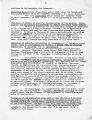
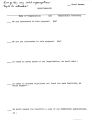
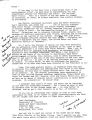
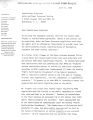
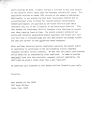
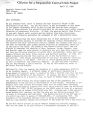
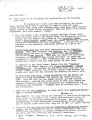
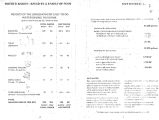
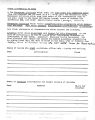
Show 2. problems in implementing the Agreement. Ommltting projections of conflict after 1994, when the Strawberry Collection System is to be complete, and demand for water developed. The only guaranteed water supply for instream flows, in this Agreement, is that 22,300 a f to be allocated by the District. Ommisslon of graphs or specific documentation of the monthly hydro-logical and biological requlremenfes to retain 50% adult trout habitat. Models of criteria for specific fish habitat is developed at Ft. Collins by U.S.Fish & Wildlife Service. It is applicable to Uinta Rivers, was used by Utah fisheries biologists in their computations. To avoid differences in Agency methodologies as well as subjective opWroniiln interpretation of the Agreement, specific information about each and all fish species in each strer should be stated, ©Ms can be done in graph form, reducing the amount of data. This could clarify the many questions of all water users. Ommisslon of specific information on consequences of reducing normal stream flows to limitations of 44,400 a f annual flow on riparian vegetation, on wetlands, and on floodplains. These all provide wildlife habitat in the National Forests. Interior Department Water Policy Task Force Reports on Instream Flows state that a criteria of the amount of flow is that biological function of the river must be maintained for wildlife habitat. Topographic and hydrologic features of the Uinta Range are such thatgappariety of riparian vegetation, wetlands and flood-plainstypes are found at all elevations. And, wetlands are not always associated with floodplains. My Inquiry to the Water Resources Council on GQ&idelines for evaluating these resources brought forth the statement that wetlands features on the Uintas are rare, in this respect. Inasmuch as the Forest Service is responsible for management of wildlife habitat, terms of the Agreement entirely ommit this aspect of the river resources and, in so doing, ignore existing legislation and an Agency's obligations relevant to this. This Agency, in pursuit of its mandates, has already carried out extensive research on habitat related to wet and dry meadows which follow alongside the streams flowage in relation to forest cover on adjacent ridges. This Agency is required to locate and evaluate wetlands and floodplains, as habitat conditions, to implement a purpose of the Water Policy - protecting wildlife habitat. In other words, in consideration that the public lands1 area we are dealing with is a national recreation resource of some significance, the Confinement of the Agreement to aquatic environments is unacceptable. Ommission of any indication what part of the 136,000 a f of water to be transported through the Strawberry Collection System still belongs to the Ute Indian Tribe and what consequences of the end of the Compact term, the year 2,005, will mean for instream flows. Since no mention is made of this condition in the Agreement, the assumption is made that Utah has clear title to 136,000 a f of water. |