| OCR Text |
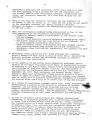
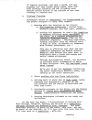
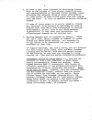
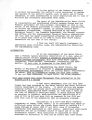
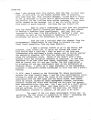
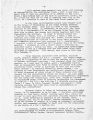
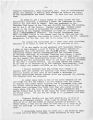
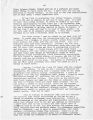
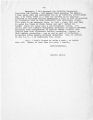
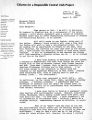
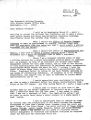
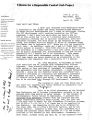
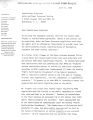
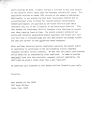
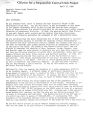
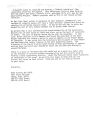
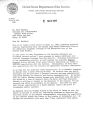
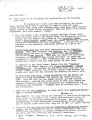
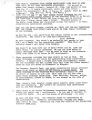
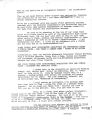
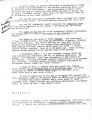
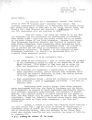
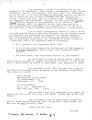
Show It is the policy of the Federal government to protect and preserve the nation's river resources, to manage the quality of the nation's waters, and, in man's use of these resources, to seek alternatives to their destruction and to loss of wildlife and recreation associated with these. The heart of the Administration Water Policy is conservation and coordinated efforts between States and the Federal government for this purpose. Contingent on this is the effort of the Federal government to reduce Federal expenditures, to relieve the taxpayer's burden, by seeking cheaper water management alternatives. Figures developed by the Water Resources Council, the Commerce Department, the General Accounting Office, and the Congressional Research Service substantiate the fact that the water conservation potential for our nation is so great that there is no need to build more water supply reservoirs for the rest of the century. I find the Draft EIS wholly Inadequate in addressing these Policies, Laws, and Administrative Directives, for implementing them. ALTERNATIVES It is the requirement of the Water Policy that a Federal Agency planning construction of a dam, canal,or channelization project prepare a primarily non-structural or demand reducing alternative. This plan covers water supply, irrigation, flood control, hydropower, recreation,(and navigation). No such plan is presented in the Draft EIS. In implementing the Water Policy, the Bureau of Reclamation is required to propose alternatives to structural developments which can fulfill public requirements for water. Such an alternative exists for Salt Lake County. It has not been addressed, in good faith, let alone proposed. Salt Lake County Dual Water Management Plan Alternative to the Bonneville M & I System A dual water management plan for Salt Lake County has been prepared by the Water Quality and Water Pollution Control Department of the County. It would utilize and manage existing surface and ground water resources and transportation structures, supplemented where needed, at less than a third of the cost of Federally developed water. It would develop water as required by industry, municipalities and agriculture at a cost of $15 to $20 per acre foot as compared to the $150 per acre foot cost of the Bonneville Unit as presently planned. Conclusions of a 1972 Utah Water Research Laboratory at Logan, Utah, state," It is concluded that there is sufficient water within the Jordan River Basin to satisfy M & I needs through at least 1990 if not 2010, even if irrigation diversions were maintained at 1965 levels. Additional inter-basin transfers are not an economic source of water now or in the foreseeable future". This conclusion is supported by facts developed at University of Utah and by former Salt Lake County |