| OCR Text |
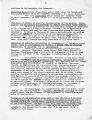
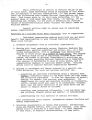
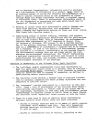
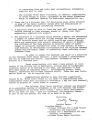
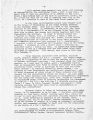
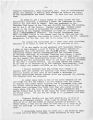
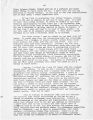
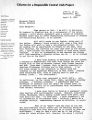
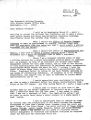
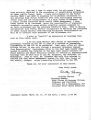
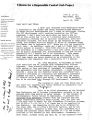
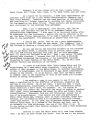
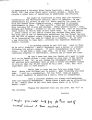
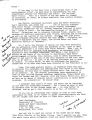
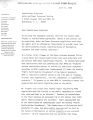
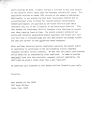
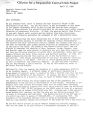
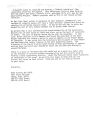
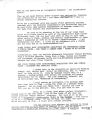
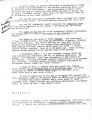
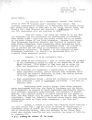
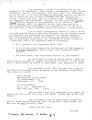
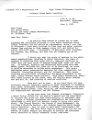
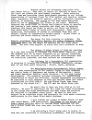
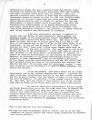
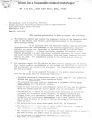
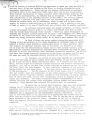
Show € CONCLUSIONS OF A STUDY ON THE FEASIBILITY OF ACCELERATING CONSTRUCTION OF THE CUP The Conservancy District is allowed a development period from 10 to 20 years to sell water and then has a time period to complete payment - usually 60 years from the beginning of the 1st payment. With a 60 year repayment for reimbusable costs, the annual quantities will be as follows: Year 1986 2000 Annual Payment $22,900,000 51,800,000 Total Payment $1,37^,000,000 3,108,000,000 In order to meet these payments, the District will use income from their ad valorem taxing authority plus user fees. The annual income to the District at ? mills is currently about $4,000,000. If the tax base inflates at the same rate as the above costs this tax will produce the following future amounts: Year 1986 2000 2006 Annual Tax Income $ ,6.700,000 15,100,000 21,500,000 Total Tax Income $ 402,000,000 906,000,000 1,290,000,000 Groundwater along the Wasatch Front currently represents an alternative source of water to CUP water. In Salt Lake County this now costs $24 per acre foot. If energy costs inflate at the same rate assumed for other costs, this source will cost $38 ae/ft 1986 and $86/ac ft by 2000. In order to meet the repayment schedule estimated above, CUP water ill cost $73 ac/ft at the end of the 8 year schedule (1986) or $165 ac/ft if fixed at the end of a 22 year schedule. These figures include only Bureau of Reclamation construction costs, thereby ignoring treatment and other O&M district costs but show the dramatic impact of construction speedup. The 8 year schedule could be achieved onlij if there are no environmental or water right challenges or that any litigation be quickly decided in favor of the project It appears that a realistically achievable level of financing for the Bonneville Unit (1978 dollars) is $60 to $70 million per year until completion. Even so, preconstruction planning, design reviews to protect public safety (independent of the Bureau), environmental analysis, right-of-way purchase, etc. will cause a two-year delay before this rate can be achieved. A very important point to make here is that it will not be possible to achieve a faster rate of project construction than that recommended in the above statement by simply Increasing the annual funding authorization. Special actions will be needed to overcome manpower limitations placed on the Bureau for necessary planning and construction supervision, to expedite currently required review to ensure dam safety and protect the environment and to provide construction workers at remote sites. Threatening court cases will have to be closely watched; and unless they can be forestalled, the effort to complete the project sooner will be in vain. "Feasibility of Accelerating Construction of the CUP" - Hughes, James, Haws, Jan 16 1978 Israelsen Utah Water Research Laboratory, College of Engineering, Utah State U., Logan _i This special action is underway. The State of Utah Is developing a"compact" with the Ute Tribe, the Bureau of Reclamation, the Department of Interior for action from the State legislature and then from Congress. This "compact" will Include development of the CUP as well as jurisdiction of the Ute Tribe over all fisheries and wildlife on its former reservation boundaries. Such jurisdiction runs counter to mandates of the Forest Service to manage and sustain wildlife habitat(Multiple Use-Sustained Yield Act) and to implement the Wilderness Act., on grounds of purpose of managing for what wildlife. If Congress authorizes this "compact" the CUP will be freed from challenges of re-authorization as a consequence of changing planning and purpose and associated costs, as well as for exceeding the authorized cost ceiing for the Project. The CUP and the State can also be freed from addressing environmental regulations such as the Clean Water and Clean Air Acts, Executive Orders to protect Wetlands and Floodplains, the Rare and Endangered Species Act, and compliance with the Administration Water Policy. The State and the CUP are vulnerable on all counts in the prospect of developing oil shale, tar sands, oil and gas, phosphate ore, and hydropower in northeast Utah. SALE OF IRRIGATION WATER BY FARMERS TO INTERMOUNTAIN POWER PROJECT FOR $1,750 per acre foot Five major water suppliers in the Delta, Utah, region, and 300 of their stockholders have agreed to sell 40,000 acre feet of irrigation water to Intermountain Power Project at a cost of $1,750 per acre foot($70,000,000). Intermountain Power Project plans power development using Kapairowitz Plateau coal as well as sharing transportation corridors with Utah Power and Light. State Senator Waddinghoam and partners will negotiate this contact at a charge of Q% ($5,000,000). Such action by the Senator may be in conflict with a "risk clause" in water contracts. " ^ n e issue here is that ultimately, when this water is not available for irrigating existing farms, the farmers can then appeal to the Water Conservancy District for CUP water for irrigation at the going rate of around $5 per acre loot. |