| OCR Text |
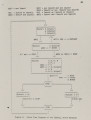
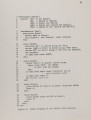
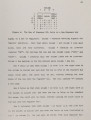
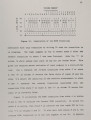
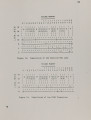
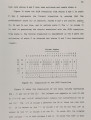
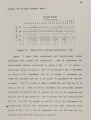
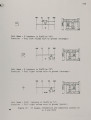
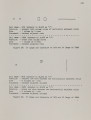
Show segment which will hol<1 the required elements. In addition to each discussion applies to the generation of all of these things. It &as mentioned above that row segments can be and are spliced together ASSASSIN. This is done by maintaining a list of use<1 row segments CD a given row and placing bounds on the length and endpoints of the row segment to be generated. When a given row segment is to be compiled, a search is conducted for an empty row segment which is large·en to contain the row segment to be compiled. When one is found, the row segment is spliced into the row and the placement of row elements done. Bounds determination is· exact and produces the shortest row row element which senses or acts on something, each row segment must have a row load. This cell is also included in the bounds determination computation. It will be placed at an empty row cell location as near the center of the row segment as possible. Also required in the compilation of any row segment is its endto- end connection with row connect cells, filling the empty places wi th blank row cells, and breaking the row segment at each end. By maintaining a list of used row cell locations on the current row segment one can fill with blanks. Knowing the bounds of the row segment allows the program to connect the row segment end-to-end and to break it at each end. It shoul d be noted that if any given row segment butts up against a previously compiled row segment, two row breaks shcuj d not be inserted between these two row segments. This information is available in the usee row eent data structure. If, |