| OCR Text |
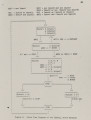
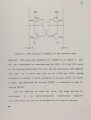
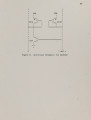
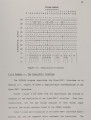
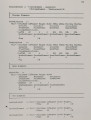
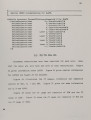
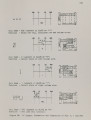
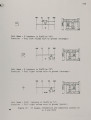
Show · there is a required mutual exclusion of output device col\llDZl.S and columns which operate on output devices. In transition generation, two row 'segments are required. The first effects the "forward" transition, the setting of the next states. The second effects the "backward" transition, the resetting of the current state(s). In general, these row segments do not require the entire lengh of the state-machine and so can be spliced together to obtain some row-wise optimization. This splicing is very effective for sequential states in which the state-to-state transitions depend on different inputs. It is exceptionally effective in the case of the backward. transition which depencs only on the current state(s) and the immediate predecessor state(s). The forward transition row requires the ability to sense that all Predecessor states of the current state(s) are inactive. A 0 row cell will be placed under tne state latch of each stae listed as a possible predecessor to this state. It also requires, in the case of FORK and MOVE, that the current state be active, sensed by placing a 1 row cell under the current state latch. All transitions require that the input condition be met. This could be as simple as sensing a Single column and is at most as complex as sensing the several columns which constitute an AND condition for a transition. If out puts are controlled by a tranSition, a temporary variable must be allocated as a column in which the transition may be indicated. This is done by placing a ,'PLUS' in the temporary column and on the row of the forward tranSition. This temporary will be used, in combination with boolean 66 |