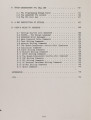
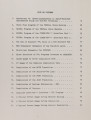
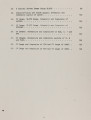
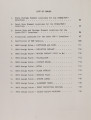
| OCR Text |
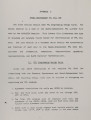
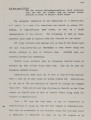
Show CHAPTER 1 INTRODUCTION In the past, computer and control systems were implemented first as vacuum tube giants, consuming vast amounts of electric' power and entire rooms of equipment. These early computers were "simple-minaed" and able to perform only the simplest of tasks at what would now be efficient processes for manufacturing integrated Circuits. As a considered a ponderous pace. The manufacturing industries and the space program then demanded' electronic controls for their products and vehicles. !hese demands led to the development of the transistor as a replacement for vacuum tubes and eventually to the cievelopment of small-scale integrated circuits (several transistors, resistors, and/or diodes) to implement the same functions present on vacuum tube computers for a fraction of the space and power costs. As the space and power costs for given functions were reduced, the demand for more complex functions grew. The demand for complex functions performed by circuits further inspired the semiconductor industries to develop better and more resul t, device dimensions and power requirements have decreased even further, thus making room for a heightened demand for increased functionality. This paired set of evolutions (both technology and demand for. |