| OCR Text |
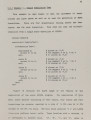
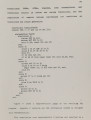
Show 19 it is able to represent PPL programs implemented in any technology. While the semantics of such programs may change with implementation variances, the syntax remains constant and therefore assures that parsers (syntactic analyzers) will not have to be significantly editor and weighed various techniques. This type of editor is now modified. It also provides for linguistic expansion of PPL representation. A complete BNF description of SIPPLDL is included in appendix D. 2.2 SLA PPL Databases At the current time, no common SLA and or PPL databases have been developed. There are plans for dveloping such a database 'during the next few months. Such a database should include a common representation for PPL (SLA) programs, PPL cell sets, PPL program design rules, and PPL cell set electrical and logical parameters so that programs which operate on PPL programs will not have to be cognizant' of the internal representations, but only of the representation handed to them by the database administrator. U SL! and PPL Program Ed i tors Several SLA program editors have been designed and implemented. Haslam l34 J has presented a scheme for implementing an SLA program being developed by Patil Systems, Inc., (PSI) in Salt Lake City. SLATE [j o J, an SLA Text Editor based on EMODE [1 J (an EMACS-like Text Editor) was developed at the University of Utah, but edited only the textual representation and has not yet been made really useful. The |