| OCR Text |
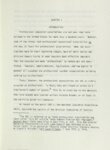
Show 42 the issue. Ideology and Language Use It is generally agreed that everyone has one is for his feelings concerning something ideology.1 sing his one things and against some chooses to Ideology can have their side of issues table. For an he is for often be or one against, As illustrated in one can or examine the one he is expres the stance are resort to the positions sound more such device is the language language individuals wish to accepted, they normally Chapter II, since every expresses recognized by When groups devices which tend to make their example, When ideology employ since one's biases and political revealed by his choice of words. language others. an of the Viet Nam use accep euPhemism.2 War.3 11 am not using the term ideology in a disapproving sense. I accept the notion that everyone has certain ideas and images that largely remain unexamined and unquestioned. Therefore, everyone is ideologue to a certain extent. This does not of an that everyone is doctrinaire. For a detailed explanation concerning the universality of ideology, see the introductory chapter of Walter Feinberg, Reason and Rhetoric (New York: John Wiley & Sons, 1975). mean 2A simple but excellent treatment of euphemisms is found in Joseph Fletcher Littell, The Language of Man, 2 vo1s. (Evanston, Ill.: McDougal Littell and Company, 1972), 2:55-65. For a more in-depth analysis see the essay by George Orwell, "Politics and the English Language," published in Charles Muscantine and Marlane Griffith, eds., The Borzoi College Reader, shorter ed. (New York: Alfred A. Knopf, 1968), pp. 74-85. 3The word war itself is an example. Many American leaders re ferred to the conflict as the United States' "involvement." These same people could have used the term "police action," but not many did. This could be due to the fact that the term was not accepted when the United States was fighting North Korea. Concerning education, the term collective negotiations is to some degree a euphemism for collec tive bargaining. Prior to collective negotiations, the term prOfes sional negotiations was used by the NEA. See or Bar"Negotiating Ins t ru c to r 76 (May g a i n i ng?" 1967): 12. |