| OCR Text |
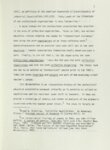
Show 26 had been making progress since the middle of the 1930's due in part to the passage of the Wagner Act which allowed private employees working in industries engaged in interstate their collectively with commerce to bargain With this and other empioyees. legislative acts, it became obvious that labor unions and their tactics, if not receiving acceptance, ready the to adopt some at least were of the of public education happened seemed to in the happen negotiations area of a This now brings to us major turning point in the Negotiations in education all agree that bargaining until the 1960's. at once. Were teachers in the United States. Collective Students of results.15 of labor? practices period of collective negotiations, history work getting nothing much Then it all Prior to 1960 there had been few teacher stoppages in the United States. rash of strikes, most of which were In the 1960's there sponsored by was a NEA affiliates. Many of the most recent groups to strike have been associations affil iated with the NEA, also. the NEA had vociferiously 16 . pro fess rona 1 Why all the strikes? attacked the strike In fact the strike . arsenal, and professional people even said that negotiations l5patrick as a was was W. Carlton and Harold I. tive Dilemma: Ne otiation in Education Charles A. Jones, 1969 , p. 187. 16 58 Arthur F. 6-8. as a wrong. The un- weapon in get into fights. people an The NEA in the Goodwin, eds., The Collec (Worthington, Corey, "Should Teachers Strike?" (October 1962): inception, being totally considered were not to tool as From its Ohio: CTA Journal |