| OCR Text |
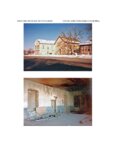
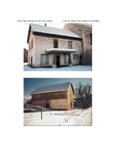
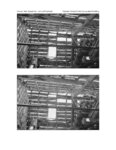
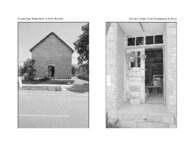
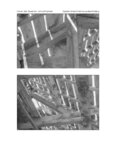
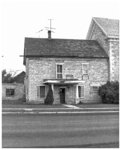
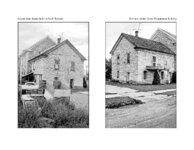
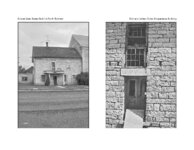
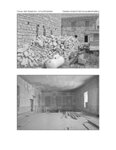
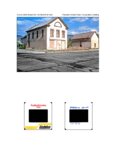
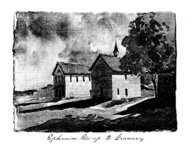
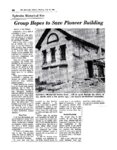
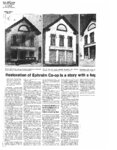
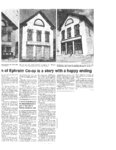
Show continued from page 7 building up to the cupola-which the project committee finally decided to include as a finishing touch. The restoration of the Granary was completed just in time for the 1991 Scandinavian Days. The gallery was filled with works of art and visitors again poured through the newest restoration. Now on a preservation "roll," the people of Ephraim are pursuing other plans to develop their historic resources. Funds are being raised to purchase vacant land across from Ephraim Town Square for a Heritage Park. A commercial buildings survey and downtown preservation master plan were completed in 1990 in preparation for a future Main Street program. The concept of a countywide heritage tourism program has also taken root. Lectures, presentations and planning meetings have been held throughout the county to encourage residents to take advantage of the thousands of intact 1850s to 1920s log, adobe, brick. and stone structures of all types and styles. County Economic Development Director Joe Blain is coordinatingjoint city and county heritage promotion. A new plan calls for each city to restore at least one major building in celebration ofU tah' s upcoming Centennial in 1996. At a private level, the trend of old building demolition in Sanpete County has been largely reversed and replaced with pro-preservation attitude. Longtime county residents are seen restoring houses and barns. Many newcomers, attracted by the area's natural beauty and gentle, historic ambience, are moving to the county (where the number of historic buildings exceeds the current population, leaving many structures vacant) and restoring older buildings. Disinvestment is out. Reinvestment is in. The Biblical parable comparing faith to a tiny mustard seed growing up to be a large and useful plant serves as an apt metaphor for the recent preservation experience in Ephraim and Sanpete County. Initial resistance was overcome by vision, perseverance, incredible effort and constituency building. Project justification went far beyond historical and architectural virtues. Preservation succeeded because it was also linked to compatible uses and economic viability. Successes were celebrated and replicated. And the lessons learned in one community are now being transferred to neighboring towns with similar resources and potential. From the few early stalwarts, the list of active supporters has multiplied to include persons from every sector. People for years tired of their poverty and weary of quick-fix solutions are beginning to accept the notion that their most valuable resources might be the old buildings they already have in abundance. The mustard seed is just beginning to grow here, but it seems well-rooted, has already weathered some storms and is now reaching up toward the promising Sanpete sky. Allen Roberts is an architect and a principal in the firm CooperlRoberts Architects. Mr. Roberts has been an active participant in the Utah historic preservation movement having worked for the Utah State Historic Society, having been an Advisor to the National Trust for Historic Preservation, in addition to working as a restoration architect. New NTHP Audio-Visual Program The National Trust for Historic Preservation has produced an audio-visual presentation entitled Tourism and Historic Preservation. It outlines the benefits of heritage tourism for both the tourism industry and local communities. The 15minute program, which can be rented or purchased as a slide/tape presentation or as a VHS video cassette, highlights the successful efforts of communities in Ala- 8 bama and Washington State to develop profitable tourism industries. The program is designed for community groups addressing the issues which are raised by encouraging economic development through expanding tourism. For further information, contact the National Trust's Western Regional Office, One Sutter Street, Suite 707, San Francisco, CA 94104; (415) 956-0610. |