| OCR Text |
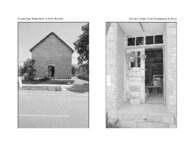
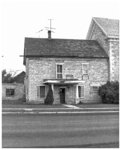
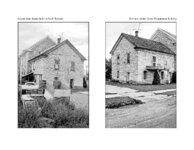
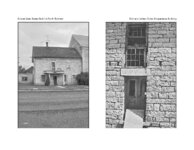
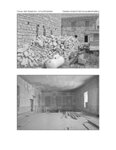
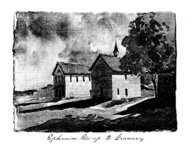
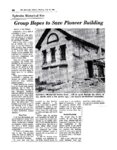
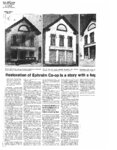
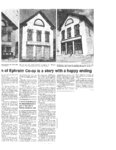
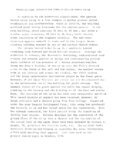
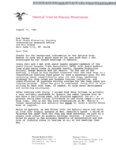
Show continued from page 5 and greater community participation. It reached out and received support from Ephraim City, the Six-County Commission, Snow college and citizens at large. Constituency-broadening produced im-" mediate results. STA received several cash donations. A local artist, Kathy Peterson, painted a water color rendering of the Co-op and Granary as they had appeared in the 1870s. STA sold prints of the painting, but the painting's greatest value was popularizing the restoration project. STA was successful in engaging volunteer help, the estimated value of which reached $30,000 (at $5/hour) through 1988. Inspiration for the cause was also found in a letter to the city from noted architectural historian Tom Carter who pointed out that razing the buildings would cause both the loss of Utah's finest Greek Revival commercial structure and the loss of the Mormon re gion 's last important co-operative building. As important as the donated time, funds and encouragement were to the burgeoning effort, STA realized that a large amount of capital would be needed to accomplish a complete restoration. Early grant-writing bore some fruit: small grants from the National Trust for Historic Preservation, Utah Heritage Foundation and the National Architectural Vernacular Society all contributed to the planning and public awareness-building effort. The big breakthrough, however, came when STA learned of the Community Impact Board (CIB), a state agency which gives major grants from its mineral lease revenues. Inviting the CIB to be a longawaited financial partner in the Co-op's restoration proved to be quite problematic. The agency distributed its funds only to cities. The Co-op property was owned by two private parties and was therefore ineligible for funding. This difficulty was overcome by a unique arrangement in which Land M Enterprises donated its major parcel to Snow College in exchange for a scholarship fund to the College provided by the City of Ephraim. The City then used its own funds to purchase the remaining parcel on which the Annex and open land for future parking were located. With the City now involved as the leading phiyer, 6 the City and STA jointly made a grant application to the CIB. A second difficulty emerged as the City learned that the CIB funds were targeted mostly for public facilities such as water and sewer systems, golf courses and fire stations, not historic preservation projects. In addition, a criteria for eligibility was that projects must show an ability to enhance local economic development. Unprepared to address these issues in detail, the CIB refused the first grant requests. Rather than resign their task, the City and STA responded to the rejection by more seriously examining the economic ramifications of the project. The City and STA agreed to a partnership wherein the City would provide restoration funds in exchange for the commitment by STA to operate a co-operative crafts and arts store and paying rent from the profits. The upper floor of the Co-op would be restored for use as a public hall where meetings, receptions, dances and other social gatherings could be held. In effect, the plan was to return the building to both of its original uses, i.e., a cooperative store in the main level space and a public assembly and social hall in the large upper room. Lobbies, restrooms, a kitchen, office, elevator and storage areas would be built in the Annex. Financial projections indicated that the completed building could be operated at a profit, while the building project would provide new local jobs and create an exciting new business on Main Street. During deliberations on finances, one other important economic argument surfaced. The restoration of the Co-op and the establishment of a crafts cooperative would attract tourists and residents of Utah to Ephraim, thereby stimulating the local economy. The project might also serve as a model and catalyst for similar projects in neighboring communities such as Manti, Mt. Pleasant and Spring City, all of which have a wealth of historical and architectural resources, and problems with lagging economies. Heritage tourism might be Sanpete County's most effective economic strategy, preservationists argued. Underutilized historic buildings countywide could be restored forrestaucontinued on page 7 |