| OCR Text |
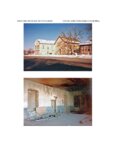
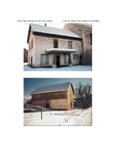
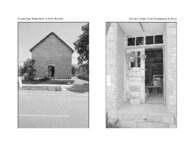
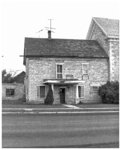
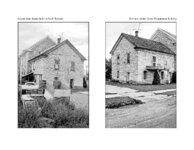
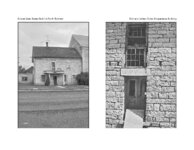
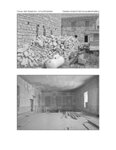
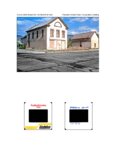
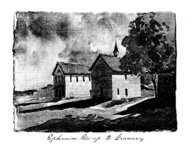
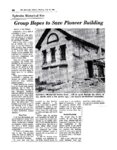
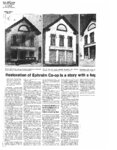
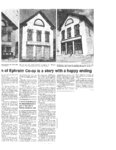
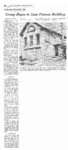
Show SALT LAKE TRIBUNE J_ _ Ephraim's co-op store, built in 1871, still displays the beehive and united order symbols. Ephraim Offers a Path to the Past on U.S. 89 Utahns are an amusing, or amazing, bunch - a notion I acquired while making the adjoining sketch a few weekends ago. The drawing shows an 187l stone building at a quiet Main Street intersection in a still-rural town, a scene (except for the traffic semaphore) that has shown little change over a century. What's amazing, or amusing, is the location. It isn't in some faraway corner of the state untouched by time. The scene is found in not-too-distant Ephraim, one of the towns along U.S. Highway 89 in the pleasant farm country between the Wasatch Plateau and the San Pitch Mountains. Few Salt Lakers seem to realize that such quiet towns still exist in Utah. But. in Mount Pleasant, most of Main Street has been labeled a "historic district," while an entire town - Spring City has received a rare accolade from the National Park Service. Most of my neighbors prefer to use their spare time in rushing down Interstate 15 to Las Vegas or even Mesquite, Nev., where architectural fakery is enlivened by the whir of slot machines or the bouncing balls of roulette wheels. A fairly recent volume dealing with Sanpete County's historic buildings and its yesteryears notes, correctly, that "Highway 89 meanders through historic pioneer towns" where one can still see "a distinctive array of stone houses, adobe pioneer homes and brick store fronts" offering vivid glimpses into Utah's past. While in Ephraim, you can't miss the two-story stone building that takes center-stage in the drawing, or the "steeple"-topped stone structure on its right. They date from 1871-72, when they were built side by side as a cooperative store and granary. The larger structure bears a recasting of a name that could persuade you to do a bit of research on your own. "Ephraim U.O. Mercantile Institution" it reads, while the beehive in the oval is likewise a reference to things churchly. JACK GOODMAN There are students of the U.O., or United Order, who will tell you its inception marked an early effort at communism or socialism among the pioneer non-Marxist Saints. Railroads had reached Utah and its chance for self-sufficiency was fading, so Brigham Young fostered the belief that the Saints should not trade with outsiders - with "gentiles." Local co-ops were, of course, supplied by a parent institution in . Salt Lake City - today's ZCMI. With the town named Orderville, on U.S. 89 near Zion National Park, the words "Zion's Cooperative Mercantile Institution" are virtually the last remnants of Brighman Young's failed effort to impose a new socialist order on the residents of the Great Basin kingdom. Enough history. Let's turn to architecture. The store at the corner of Main and 100 South in Ephraim was built of oolitic limestone - not unlike the stone in the Kearns Mansion on Salt Lake's South Temple Street. The co-op store occupied its first floor, while the second floor was built as a recreation hall and Relief Society meeting place. The architect is not known, but its bracketed cornice "returns," the store pilasters, quoins and symmetrical facade are typical of the period - in Utah, and especially in the Midwest. The limestone granary building to the south, now topped by a steeple-like air vent. was first operated by the Women's Relief Society to house the sisters' grainsaving duties. It remains virtually devOid of embellisbment. The co-op main floor housed farm implements, clothing, local food products and the like - as . in any general store in most any country town in our nation, before malls were invented. Folks brought their eggs, hand-ehurned butter, cheese and other farm produce to the store to exchange for products sent from ZCMI. As historian Leonard Arrington noted in his Great Basin Kingdom , the co-op movement failed in most cases to heighten the spirit of "temporal oneness." C0op goods seemed unable to compete with cheaper or machinemade goods brought in by the new railroads from factories in the East. Cheap prices and profit were of supreme importance even in Mormon villages. By 1888 the quarters of the new Sanpete Stake Academy were using the second-floor space (that was the start of Snow College). The store became a more typical, plain American-style general store as the co-op movement faded. Then the ground floor was used for farm-equipment sales; next came a garage, then a grain mill, even film shows. Finally the store front deteriorated, and the building, which had had its windows bricked in when a garage, was shuttered. Fortunately, many residents of Sanpete County and such towns as Spring City and Ephraim began to realize history could be their ally in attracting tourist trade. Buildings were spruced up in much of the region - and today the store building and adjoining granary survive as a handicraft store, art gallery and meeting hall. Something of a return to the past - since local handmade goods such as quilts of local origin had been sold in the store during its butter-and-egg days. Jack Goodman lUis been associated with The Salt Lake Tribune as a staff or free-lance writ- \ er for 52 yeaTS. I |