| OCR Text |
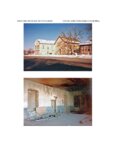
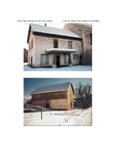
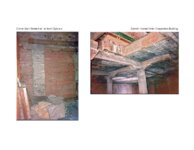
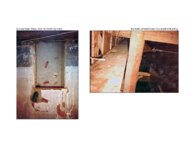
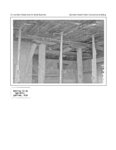
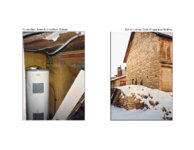
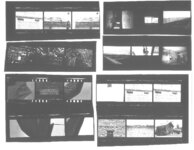
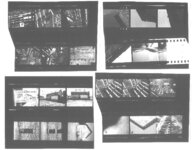
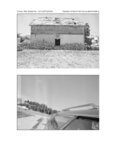
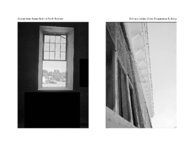
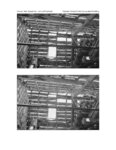
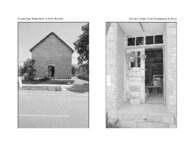
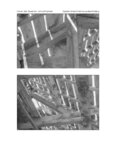
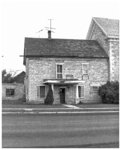
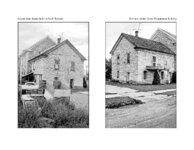
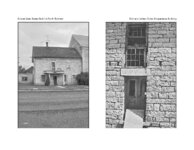
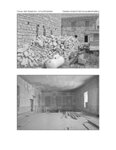
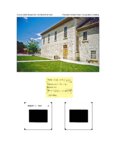
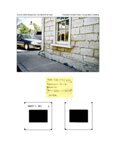
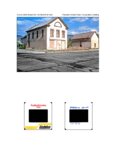
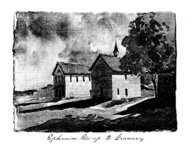
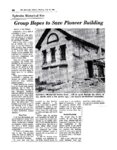
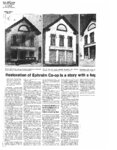
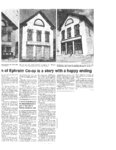
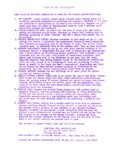
Show ~-=i~::.~~:::r:::-"?:~ ~:-:;'': -: ~- The Granary (work in progress) Photo courtesy of Allen Roberts this era of social and economic experimentation, none was more impressive than the one in Ephraim. Settled as a fort-town in 1854, largely by immigrants fresh from Denmark, Ephraim's early populace included master building craftsmen of all kinds. Because masons were plentiful and an excellent supply of oolite limestone was locally available, many of the town's earl y pu blic buildings were fine masonry structures. Of the three most impressive original buildings-the LDS Tabernacle, the City Hall and the Co-op, only the latter survived the 1950s. The vernacular/Greek Revival Co-op and its Granary had survived because of their adaptability to other uses. After the demise of the co-op system, the mercantile became the first home of the Sanpete Stake Academy (later Snow College) in 1888. Although the first floor store remained in commercial usage, the single, spacious upper room-originally used for socials and meetings of the Relief Society, the Mormon women's auxiliary-proved ideal for large classes. The "Annex", a matching stone addition also built in the 1870s, provided needed space for offices and smaller classes. By the turn of the century, however, the fledgling college had outgrown the old Co-op and a new campus was built a block to the east. 4 Abandoned for a second time, the sturdily built Co-op continued to find utility, next as Peterson's farm implement store, then as Ericksen's car repair garage and eventually as Hermansen's "Ephraim Roller Mills." To create the latter complex, a onestory addition was erected to connect the two existing stone structures. For some reason lost to us now, building roles were reversed as the Granary was converted into a mill while the Co-op was made a granary. The modifications needed for the conversion to a mill had a devastating effect on the interior architecture of the two buildings. The floor levels of the Granary were changed and its remarkable double-chord, heavy timber trusses were modified. The Co-op fared even worse as its front windows and doors were bricked in and its columns were replaced with solid wood compartments for grain storage. The pressure from the weight of tons of grain proved too much even for the 30-inch thick exterior walls. The front (west) wall first bulged outward and then cracked open. With wide fissures visible on the exterior, the building was deemed structurally unsound. It continued in use, however, until the mill ceased operations in the 1950s. Its owners lost possession of the property and the Bank of Ephraim reluctantly took it over. Several times the buildings' lives had been extended, but now, unused, modified and in poor condition, they seemed more a dangerous liability than an asset. With community sentiment for the buildings apparently exhausted, the bank made plans to raze the entire mill complex. In 1969, as demolition commenced on the newer middle addition, Richard and Nadine Nibley, who lived in the historic Canute Peterson House a few doors south of the Co-op, realized that Ephraim was in the process of losing its continued on page 5 |