| OCR Text |
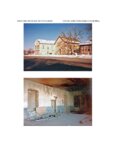
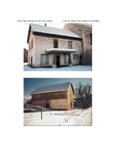
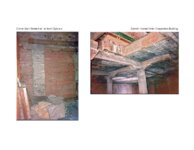
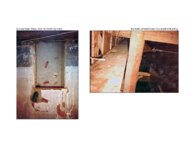
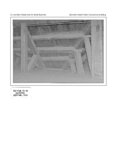
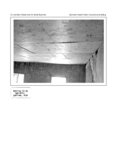
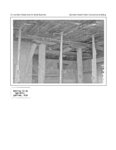
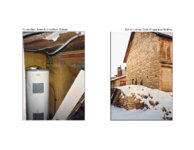
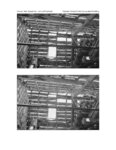
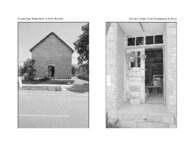
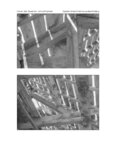
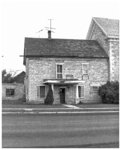
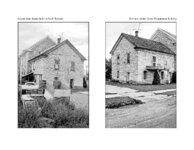
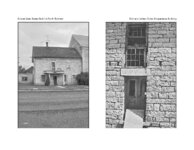
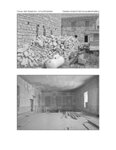
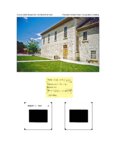
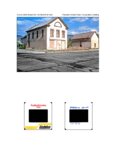
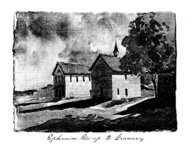
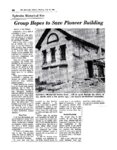
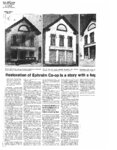
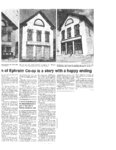
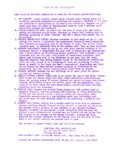
Show 'RESS ASSOCIATION CLIPPING SERVICE F.'.Jn~32Ud laIt rAe City, Utah 14111 PROVO DAILY HERAlt) B,u ilt in 1871·72, ihis two·story limestone building was constructed as the Ephraim Co-operatlve Mercantile Institution. One of over 120 co-ops organized throughout the "Mormon Corridor", the Co-op stood idle for more than 15 years. Restoration of the Co-op wa Scandinavian Days. Today it I Restoration of Ephraim Co-op is a story with a hal Editor's note: The following information is reprinted with permission from story- boards on display in the reo stored Ephraim Cooperative Mercantile store. EPHRAIM - Times were diffi· : .cuJt for the pioneers in this isolated ' : 'valley, Though they were very ' : :self'sufficient, such things as shoes :. :were just about impossible to get. :: :When the railroad came through in '::'1869, the LOS Church set up a ::.:Cooperative system of stores. _ ::: The Zion's Cooperative Mer· : < cafitile Institute, was set up in Salt : : Lake City aod became the parent · :-company for over 100 stores in the : ': west. ,People were encouraged to : ; Iive the United Order life·sty Ie and : ~ trade what they did have for goods · : they did nilt have. '. Citizens in Ephraim were enthu: . siastic and built a beautiful, solid ::building in 1871 to house the new • : store, All kiods of goods could be :: purchased there from shoes to :- Jarm equipment to lace. Payments : : were made in produce, homemade < articles, labor, special ZCMI · : script, or tokens, with grain, eggs : : and butter being the most common : ,._sources of trade. .' .. The upstairs was very impor· ':. 'timt. With a stage at the west end of : 4/10: room aod a balcony on the east, :: "i.t -1;>ecame a center for meetings, town gatherings, dances and plays. Admission to the social activities was paid with sacks of flour, ".. gr~in or other surplus articles. " ' The ZCMI monopoly did not last long, however, and local mer· ,,' chants took over the store. It was .... s till a cooperative, but the words " "United Order" were dropped from the name. It became the ~ .. pphraim Cooperative Mercantile _ . : Institution. :.: :: Later, when the Sanpete Valley \':, ~ R~ailroad and the Rio Grande Rail· e d met in Ephraim in 1897, its name was changed again to the Junctiori Co-op. Even though the spirit of cooperation was good, too many people took out too much credit and could not pay their bills. Throughout the state, the cooperatives ended, and other kinds of stores took their place. The Ephraim building then housed many different kinds of businesses, including a farm im· plement store, a car repair garage, and part of a mill complex, known as the Ephraim Roller Mills. The upstairs continued to have varied activities including dances, the Ephraim City North Ward Relief Society Meetings and the showing of the first silent movies in town. But eventually all of these activities ceased and the Bank of Ephraim was left with an empty building that was quickly falling into disrepair. Its future looked as bleak as all of the other historic co-op build· ings. It seemed destined to be de· molished and a part of ' Ephraim's and the west's history, would be forever lost. In 1969, the middle section (Ephraim Roller Mill) that con· nected the old Cooperative with the Relief Society Granary, was tom down and plans were made to rid the comer of both of its old buildings. Richard and Nadine Nibley knew they had to do something to prese rve the heritage of early Ephraim. Along with nearly. 70 other people either from the area or with roots in it, they formed the Sanpete Development Corpora· tion. They bought shares and acquired the property from the Bank of Ephraim. They did not yet know what could become of the buildings ; they only had faith that it was the right thing to do. Indeed, a new kind of pioneer was born - one who knew somehow that preserving the past would benefit the fu· ture. When the corporation could no longer sustain its payments, Orson Lauritzen and Don Montgomery, of L & M 'Enterprises, paid the mortgage off. In 1975 , Dr. Sheril V. Hill , a new Dean of Instruction of Snow College and a lover of Theatre Arts, created the Sanpete CommunityTheatre Group. Its members envisioned the old Cooperative as both a headquarters and a good place to produce plays. This enthusiastic group obtained a $5 ,000 Bi-centennial grant to pay It seel11ed destined to be demolished and a part of Ephraim's history would be lost. for repairing the trusses and the roof. Another grant from the Utah State Historical Society paid for othet structural repairs. While an architect was hired and plans drawn up , ultimately a theater did not seem to fit as the answer for the old building's use. It reo mained standing in general disrepair for another 15 years. The SDA went defunct. Durings most of the 1980's, the buildings were given up for dead. In the later 1980's, amidst renewed rumblings for demolition, two local groups formed - inter· ested in developing an arts and crafts industry in Ephraim. Once discovering each other, the two formed the Sanpete Trade Association and solicited interest in restoring the buildings. At first: the burden of a dream was on a few shoulders only, but as the concepts grew, so did the number of people who carrie to believe in it. Citizens, college employees, Ephraim city officials, USU Coun· ty Extension personnel and SixCounty commissioners began to work together. The restoration of the old Co-op building began to act as a flagship to show what can be done. Although the ST A worked hard to find a way to preserve the build· ing, their best fuoding source, the Community Impact Board could only give money to eligible city governments. Thus, Ed Meyer from the State Rural Economic Development Office and Alan Fawcett from the Six·County Commission Office , helped develop a unique partnership between the ST A and Ephraim City. It proved to be a wonderful ex· ample of a symbiotic relationship: the City could tum an eyesore into a beautiful comer, and ST A could carry out its plan for economic and historic development. Under the mayorship of Robert Warnick, STA presented its plan twice before the cm. Both times members were encouraged to reo fine their plans and gain even more city backing. Finally the right combination was made. On Feb. 2, 1989, Robert Stod· dard, Sandra Lanier and Lynn Schiffman presented the plan that netted $330,000 for the restoration of the old Co-op and Ephraim Square. Calculating the average number of people (10) who spent the average number of hours per week (3) for the past four years at $5 per hour, the figure of $30,000 in la· bor in kind emerges. Already STA has produced its first catalogue and sent out over 5300 mailings. All work from the conception of the idea, to the or· ganizing of the crafters, to the ju· rying of each piece of work, I( drawing of pictures and the laJ of pages, to the writing and ty ofa script, to the printing, to p ing, bank accounting , to a( mailing, receiving and shippir orders has been volunteered. The building is being reston its original purpose and its inti ty being preserved. Cooper/Roberts Architec1 Salt Lake City designed the n |