| OCR Text |
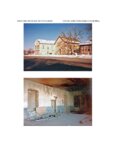
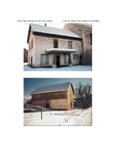
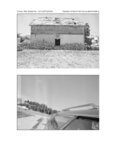
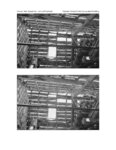
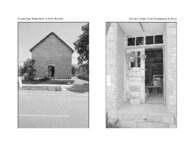
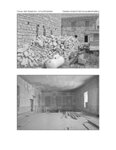
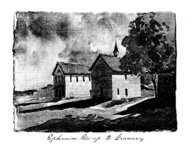
Show continued from page 4 two most beloved landmarks. Associated with the Sanpete Historical Society and deeply committed to historic preservation, the Nibleys quickly mobilized a group of friends to make an offer to purchase the remaining buildings. An investment company was formed and seventy people acquired shares of stock, raising enough capital to secure a mortgage on the Co-op property. Calling itself the Sanpete Development Corporation (SDA), the group had no plan or strategy, no use for the building and no income from the property. Their act of rescuing the buildings from the bulldozer was an act of pure faith. Making monthly mortgage payments of $700 on a non-income producing "investment" soon became a great financial burden. When the group could no longer manage the payments, two of its major stockholders, Orson Lauritzen and Don Montgomery of Land M Enterprises, agreed to take over the payments. During the early 1970s, the SD A worked at raising funds and finding a profitable use for the buildings, but to little avail. Finally, in 1975, their courageous holding effort seemed to gain new life as Sherrill Hill, Academic Vice President of Snow College and a theater lover, created the Sanpete Community Theater Group and proposed restoring the vacant Co-op for re-use as a community theater. In 1976 a grant for stabilizing the roof structure was obtained through the federal Grant-in-Aid program administered by the Preservation Office of the Utah State Historical Society. Another grant of$5 ,QOO was securedforre-roofing and cornice repairs. As this work progressed, Cooper!Roberts Architects of Salt Lake City prepared plans for the Coop's adaptive re-use as a theater. Growing optimism for a successful project outcome was short-lived, however. Further fund-raising efforts stalled and momentum was almost entirely lost when, in 1979, Richard Nibley died and Sherrill Hill moved from Ephraim. The ensuing hiatus in preservation activity lasted nearly a decade. The SDA went defunct. Their efforts had saved the buildings from certain destruction but preseFVation had not been achieved. 5 During most of the 1980s the buildings had been given up for dead. Some people used the past tense when speaking of the Co-op and Granary. They pondered how the vacant land might be used. Though their obituaries had been read many times, no one was willing to take the final initiative to actually destroy the derelict structures. The lack of demolition itself became a source of embarrassment. Righteous decisi veness is a revered quality in the Mormon culture, as is the maintenance of good appearance. Going year after year without removing the City's most visible eyesore could not be tolerated forever. The forestalling of demolition might be credited to another set of Mormon values: a strong interest in ancestors and respect for their accomplishments. The Co-op and Granary had been built by the forefathers of many of the same people now debating the buildings' outcome. In deference to the competing views held throughout the community, the democratic process was stalemated indefinitely. No one was angered or hurt, but no one was comfortable with maintaining the status quo either. Some action needed to be taken. In the later 1980s, amidst renewed rumblings for demolition, two local groups formed separatel y and held meetings to develop an arts and crafts movement in Ephraim. One group, formed by some Snow College employees and others who had lost their jobs at the Sperry plant, called themselves "Second Time Around" or STA. STA planned to form a crafts co-operative, partly as a means of helping the unemployed. At the same time, a group including Nadine Nibley explored the possibility of converting the Granary to a crafts house similar to the one Nadine had been operating in her own historic home. When the two groups learned of each other and their common purposes, they merged. Keeping the acronym STA, they changed the meaning of the initials to stand for the "Sanpete Trade Associa:.. tion" and began holding regular meetings at the College. Initially STA was a small, inexperienced grou p of well-intended crafters and artisans. But the group soon understood its need to solicit advice, funding continued on page 6 |