| OCR Text |
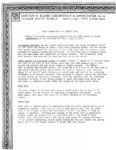
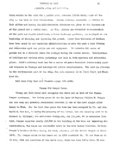
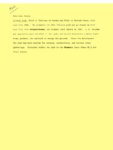
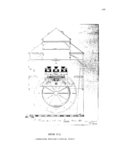
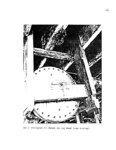
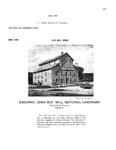
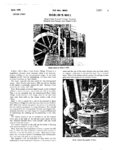
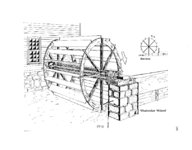
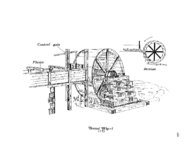
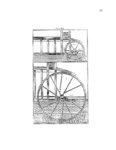
Show T65 i. Interviews This section contains materials from persons interviewd by the architects, and our comments on the interview experience as a whole. The goal w.a s to obtain as much first-hand information as possible. The material presented here does not cover all subjects interviewed, but includes the most informative ones. From these and other interviews we concluded that: 1. The subjects interviewed could tell us nothing first-hand about the operative period of the mill because none of them were old enough to have been alive during those years; 2. Although most subjects claimed to have a clear memory of what they had seen, their accounts often changed when asked later about the same information; 3. Even is each account were internally consistent, combined they could not all be true, because each differed, sometimes radically, from subject to subject. This inconsistency may reflect the various time periods on which the subjects were focusing, but even such an hypothesis cannot cover all the discrepancies and inconsistencies in the whole collection . of data; 4 . Subjects who had the longest association with the mill, and therefore the greatest visual exposure to it, did not necessarily have the best recall of detail. This was unexpected , and caused us to wonder if others with minimal exposure had not magnified their memories or perhaps confused their recollections of the Chase Mill with some other mill; 5. It was difficult, if not impossible, to determine which accounts were reliable and which were not. (Credibility is impossible to prove when the facts (or artifacts) on which it is based no longer exist.) 6. Despite the difficulty in reconciling the various accounts, it may still be worthwhile to conduct more interviews in the hope that enough details will be referred to frequently enough to authenticate at lea~t some of them; 7. On the whole, we did not rely on verbal accounts as primary evidence; they assumed a secondary role in rebuil ding the hypothetical model of the Chase Mill's operative period. Joe Cecala This interview occurred in August of 1979. Joe is age 74, and he worked in the Chase Mill when it was converted to a blacksmith shop ca. 1919. Data from this interview includes the following: 1. The basement was always full of water and had to be pumped. 2. He remembered a large, possibly undershot, ten to twelve foot wheel (diameter), made of wood having slats or paddles. 3. He recalled stairs on both the north and south ends of the basement, and that workmen usually used the south set. 4. The work of 1933-1934 consisted mostly of minor repairs and cleaning. The wheels =sicJwere taken out when the conversion to the blacksmith shop was made. |