| OCR Text |
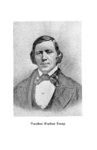
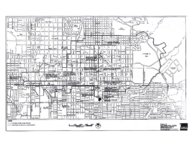
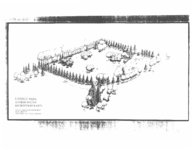
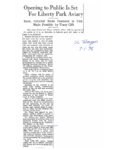
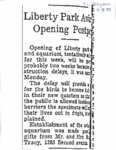
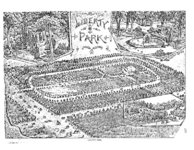
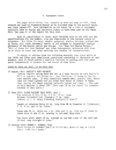
Show Reconnaissance-i.evel Cultural Resources Inventory of Uberty Lake, Salt Lake City, Salt Lake County, Utah CULTURAL CONTEXT The first documented occurrence of non-native peoples to visit northern Utah happened in 1776, when an expedition led by Spanish friars Francisco Atanasio Dominguez and Silvestre Velez de Escalante entered the Utah Valley (May 1987:24). The Spanish expedition never made it as far north as the Salt Lake Valley, and no permanent Spanish presence was established along the Wasatch Front as a result of their explorations (Sillitoe 1996: 17). Other Euro-American explorers soon followed the Spaniards, and by the 1820s, trappers Louis Vasquez, Etienne Provost, and Jim Bridger had all been "separately credited with 'discovering' the Great Salt Lake" (Sillitoe 1996: 17). Famed fur trader Jedediah Strong Smith was also reported to have explored the northern portion of the Salt Lake Valley by the mid-1820s (May 1987:35-36). In 1843, army topographical engineer John C. Fremont explored the south shore of Great Salt Lake before heading north into Idaho and then west to the Pacific Coast (May 1987:50-53). The following year, on his return trip from the coast, he explored Utah Valley before leaving the area via Spanish Fork Canyon (DeLafosse 1998). While in the valley, Fremont described the geography of present day Utah. His descriptions of the area would prove instrumental for the emigration of members of the Church of Jesus Christ of Latter-day Saints (Mormons or LDS) to Utah (Holzapfel 1999:37; May 1987:52). The history of settlement in Salt Lake County actually begins over 1,300 miles east in the city of Nauvoo, Illinois. Under the guidance of LDS Church leader Brigham Young, a large group of Mormon pioneers left the Midwest in search of self-sufficiency and freedom from perceived religious persecution. On July 24, 1847, the journey reached its conclusion when the group of Mormons arrived in the Salt Lake Valley (Sillitoe 1996: 1). Shortly thereafter, the State of Deseret and the City of Zion were established. The Compromise of 1850 created the Utah territory, "a substitute for the State of Deseret that had been requested by Brigham Young and his followers" (Leonard 1999:67). The introduction of the railroad in the West was one ofthe foremost events of the nineteenth century. In 1869, railroading appeared with the completion of the first transcontinental line, which ran through Promontory, Corinne, and Ogden, north of Salt Lake City (Carr and Edwards 1989:7-12; Sillitoe 1996:73). Recognizing the economic importance of being connected with the main national east-west transportation corridor, the Mormons initiated the construction of the Utah Central Railroad to link Salt Lake City with the transcontinental line at Ogden (Carr and Edwards 1989: 12; Sillitoe 1996:73). The railroads brought more and more people to Salt Lake City, either looking to settle there or to purchase supplies before heading further west. A large park was constructed in Salt Lake City to improve the moral character of the city's residents and appear more civilized in hopes of attracting more residents. Liberty Park was buiit on property purchased by Salt Lake City from the estate of Brigham Young in 1881 (Haglund 1979). Liberty Park was dedicated on June 17, 1882 (Haglund 1979). Later additions to the park included a greenhouse, tennis courts, bandstand, swimming pool, zoo, and aviary (Haglund 1979). On January 4, 1896, after the official renunciation of polygamy by the Mormon Church, the Utah Territory was granted statehood (Sillitoe 1996: 121). " ... World War I had a tremendous impact in the Salt Lake Valley economically, socially, and culturally between 1914 and 1918" (Sillitoe 1996: 146). Many residents, eager to prove their patriotism, answered the national call for support, while tensions arose among some of the more ethnically diverse communities, particularly those whose residents included recent immigrants and decedents of countries not aligned with the United States (Sillitoe 1996: 146-147). Women were hired for traditionally male jobs during the war throughout the valley, including the mechanical department for Utah Power & Light (Sillitoe 1996: 145-146). The demand for metals prompted major increases in productivity at the local mines and smelting facilities spurred prosperity within the valley (Sillitoe 1996:146). Unfortunately, this prosperity would come to an end with the end of World War I. Reductions in the United States' military spending and the return of European farms to production depressed the farming and mining economies in Utah (May 1987: 173). These changes in tum would impact transportation and 3 |