| OCR Text |
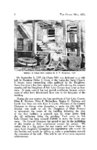
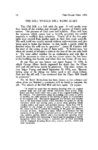
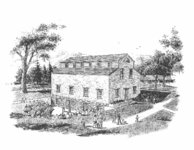
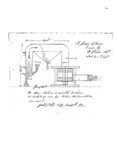
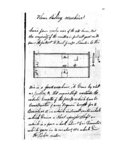
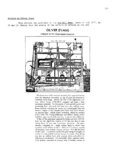
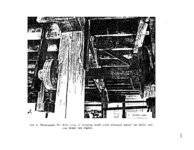
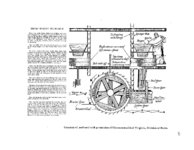
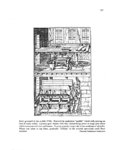
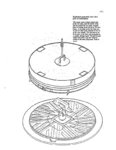
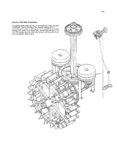
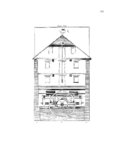
Show flannel running over' a pair of pulleys. 'The hopper boy-socalled because it replaced a young worker-was a large revolving rake which spread the grain evenly in a hoop upon the topmost floor of the mill (called the meal loft) so as to cool and dry the flour before bolting and packaging. It was then. guided to the chute over the bolting hopper, which then passed the grain to the bolting chest. Together, these various inventions earned for Evans the tide "Father of Mechanized Flour Milling." Evans also made a number of improvements in manufacturing millstones. Before the end of the eighteenth century stones carved from frne French buhr were considered superior to any the Americans could produce. These buhrstones consisted of small stones dressed and cemented with plaster of Paris and bound with iron hoops. While basically an outstanding product, their greatest drawback was that they were expensive and difficult to make . In 1796 Evans secured a patent for his improvements to millstones. By properly balancing his stones and by carving grooves and furrows into a solid stone he was able to achieve the same results as the more delux French stotles. Oliver Evans and his improvements to milling permeated the industry and transformed an ancient process into a modern techRique. Evans accomplished this feat not only by detailing his designs in several editions of his book, but by traveling about helping others to build mills according CO his principles and by providing parts for existing mills. After building his own "Red Clay" mill near Camden, New Jersey , in the late 1780's, he went to Maryland to help the prosperous Ellicott -family build a huge mill in what is now Ellicott City , near Baltimore. Thomas Ellicott also operated a number of mills in northern Virginia. Among his more famous customers were George Washington and Thomas Jefferson, both of whom purchased parts from Evans for their own mills. Washington 's gristmill may be visited near Mount Vernon. Oliver Evans was a universal inventive genius and was known not only for his revolutionary milling process but also for his profound contributions to the building of steam engines. Oliver Evans pioneered in developing the reciprocating engine, a task undertaken after he quit the milling business. In 1804 he' designed and built a high-pressure engine that worked only by steam and which compared favorably with the widely-used Bolton-and-Watt engines. Evans continued to revolutionize on American technology by applying his new engine to the milling process. With a single engine he broke and ground three hundred bushels of plaster of Paris in a single twenty-four hour period. In his Philadelphia shop he put the engine ~o work driving twelve saws through a hundred feet of solid marble. The success of his power-driven saws stimulated a demand for sawmills, and the vast timber lands of America's frontier were cleared with the help of Evans' engines. I t was also his improvements to saw mills which created the circular saw, about 1815, which greatly increased the manufacture of stan· dardized wood parts for buildings. In 1803 Evans opened a machine shop in Philadelphia and operated it with a steam engine of his own design. In 1808 he went to Pittsburgh where he built a steam flour mill that be· .came a recognized pacesetter among western mills. Two pairs of stones of Evans' own design were driven by steam power and could grind ten bushels of rye or nine bushels of wheat in a single hour. The Pittsburgh Gazette of December 6, 1809, declared that the mill " ushered in a new era" for the wheat and rye farmers of the west. Within three years Evans ' engines were powering mills in a number of states as well as powering printing presses in New York City, (From a brochure of The Fairfax County Park Authority , Division of History, Annandale , Virginia 22003 ). • 115 |