| OCR Text |
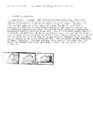
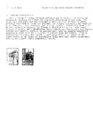
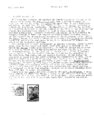
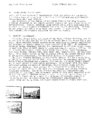
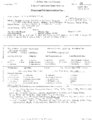
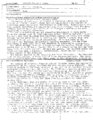
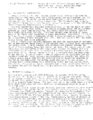
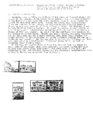
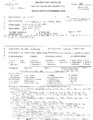
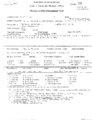
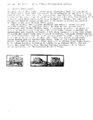
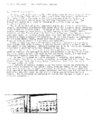
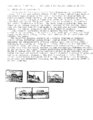
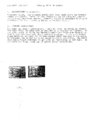
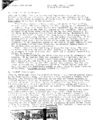
Show 15~ 3asb 200 South J. A. Frtisch Block/Guthrie Gyclery ' 4. ARCHITECTURE (continued): front facade is roughly square in shape but has v;ell balanced vertical and horizontal emphasis. Vertical thrust "is provided by the central panel which extends, out slightly from the main field of the front wall and contains the arched entry, tv:o pairs of windows and a pyramidal pediment. The pilasters at each end of the facade extend the full height of the front and also provide a sense of verticality. Horizontal balance comes from the heavy first floor cornice, second floor belt course and heavy s corbeled, upper cornice, pediment and false parapet wall. Detailing follows the line of Richardsonian Romanesque architecture as regionally adapted in Utah. Carved stone decoration is plentiful as evidenced in the capitals under the entry arch, the capitals in the pilasters at the second floor level, the terminals of the corbeled arches over the Roman windows, etc. The carved foliated patterns are typically Richardsonian Rusticated stone enters the design in the side pilasters and the arched entry bay panel. Corbeled brickwork in theforirf of dentils, bands and horizontal belt courses add relief as do the corbeled stone sills and molded tin entablature which forms the cornice atop the first level of the facade. The tin cornice across the top of the Fritsch Block is also molded and bracketed and gives a deep shadow line. Recessed pockets in the parapet wall and pediment and molded wooden mullions on the bottom levels complete the decoration ofthe facade. Interior features include original floors, walls, ceilings, trim, doors, stairway with railings and newell posts, and. skylights. The upper floors, though poorly maintained, are almost totally unaltered. The front facade has unfortunately been painted pink* The owner of the old Fritsch Block is working with restorationists to correct this error. 5* HISTORY (continued)": About 1931-1932 Lorus Manwaring, Sr., bought what v/as then the Granite Building for his business, Guthrie Bicycle Company, which had been formerly located at 228 East 200 South. Mr. Manwaring leased the upper floor as hotel space for a few years and maintained his bicycle business downstairs. From about 1935 to 19^-5 ^p » Manwaring lived, in the upstairs which he remodeled into an apartmentfor his family and at that time did extensive rewiring to the building. Lorus Manwaring left the business in 1966, the same year he died. His son Lorus Manwaring, Jr., assumed control and in 1970 he also retired, leaving it to his son-in-law, Harold Wc Goddard, v/ho has continued the bicycle business downstairs but has again begun leasing studio and office spa.ce on the second floor. The architectural firm, Carroll and Kern, .which v/as responsible for the Frtisch Block, v/as active in Salt Lake For only two years, from 1888 to 1390* During this short period however, Carooll and Kern designed more buildings than any otherfirm in the territory. Building records for 1890 indicate that Carroll and Kern designed if5 major projects (over $5,000) in that year compared to 25 buildings for Richard K c A c Kletting, ten for ",-3.11 as and Hedges, 11 for V/alter E. '.'/ore, etc* V/illien Carroll and his father Henry G. Carroll were in partnership in ,ho building business in Provo, Utah, in the I3?0s and 1880s, with V/iiliam -'jcponsible for the architectural work. V/illian came to Salt Lake City r, late 153?, having been preceded by his father and. another brother in :,35. It is Torobs.ble that he first established a small residential practice -ich expanded to a full-service office in 1388, as he is listed in the 1839 :.;iness" directory as on architect. '.'/illiam 1 s move to Salt Lake^City was ^ :.".'. timed .and corresponded perfectly with thebeginning of the city's greet |