| OCR Text |
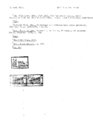
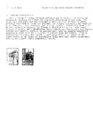
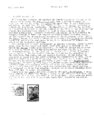
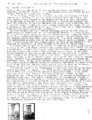
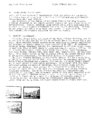
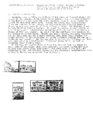
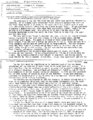
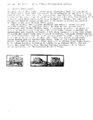
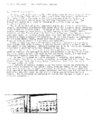
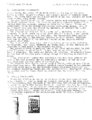
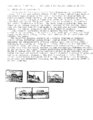
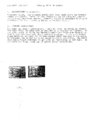
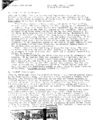
Show ^1 South Main Tracy Loan and Trust Company Building /4. ARCHITECTURE (continued): motifs, egg-and-darts bands and dentils. Original scagliola as well as real marble is extant in the original foyer area. The facade of the Tracy Loan and Trust Company Building is Neo-Classical Revival in style. Its symmetrical composition features a pair of polished marble columns which sit upon a granite pedestal and support, at least visually, a classical entablature. The columns have Ionic capitals and a Greek entasis. The Ionic entablature is complete with an architrave, frieze (upon which the inscription "Ivory and Company" is engraved), and cornice. The cornice features dentils, an egg-and-dart band and Greek moldings. Above the cornic is a balustrade, complete with side pedestals, a. high lov/er railing and a top rail. Along the outsides of the two columns are square columns or pilasters. They are faced with cut sandstone on limestone and are engaged, i.e. they tie back into the building. Entrance to the Tracy Loan and Trust Company Building is made through a set of double doors which are located in a vestible which extends from the center of a. recessed window wall. The window wall consists of wide metal mullions and plate glass windows. A metal grille partially covers the upper section of windows which were originally clerestory but now light the second story offices. While some modification of the front curtain wall has occurred, the historical appearance of the front facade is essentially intact. 5. HISTORY (continued): and .Potentate and Exalted Ruler of the Elks. He was also president of the Salt Lake City Rotary Club, president of theAlta Club and as a member of the Chamber of Commerce, participated in numerous activities intended to promote commercial and industrial growth in Salt Lake City. As the Tracy Loan and Trust Company grew to become oneof the city 1 s larger banking institutions, it required improved quarters and in!9l6 built a three-room bank with one tall story and brick, steel and concrete construction. James Stewart and Company built the bank for a cost of $^-0,000. Walter J. Cooper, architect of the Tracy Loan and Trust Company Building, had been associated with three of the most prominent architectural firms in New York City before corning to Salt Lake City in 1910 to supervise the construction of the Boston and Newhouse Buildings and Newhouse Hotel, all designed by Henry Ives Cobb. Upon completion of these projects he returned to New York where he stayed only briefly before deciding to take up permanent residency in Salt Lake City. In 1911 Cooper formed a partnership v/ith Charles Snead McDonald under the firm name of McDonald and Cooper. Their two most important projects were the "fireproof" Keith O f Brien Buildir and the Walker Bank, at the time claimed to be the tallest building between the Mississippi River and the Pacific Coast (they were associate architects rvith Eames and Young of St. Louis. The partnership was dissolved in 1916, the same year Cioper designed the Tracy Loan and Trust Company Building.). Other important works of Walter J. Cooper include residences and mine buildings for the Chief Consolidated Mining Company at Eureka, Utah (Nations Register Historic District), Isolation Hospital, Beck Hot Springs Natatoriun in Salt Lake City, the Tomaha.v.rk Hotel at Green River, Wyoming, and banks at r'::>ck Springs, Wyoming, St. Anthony, Idaho, and Magna, Utah. |