| OCR Text |
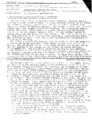
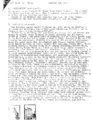
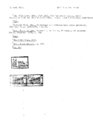
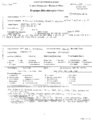
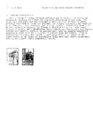
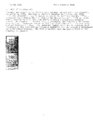
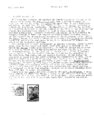
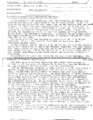
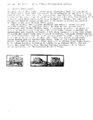
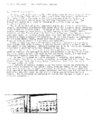
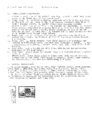
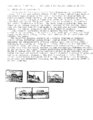
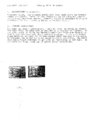
Show 238-South Main Street Lollin Block 4. ARCHITECTURE (continued): Only the first floor of the Lollin Block is presently being used. The upper floors will require rewiring and extensive repairs before reuse. The current owners have no restoration plans a.t present, 5. HISTORY (continued): The Saloon and investments in mining proved successful, and in 1894- the Lollin Block was constructed on property purchased from William Jennings in 1871. The street floor of the Lollin Block was leased to the Davis Shoe Company from 1901 until 1913; the Hudson Bay Fur Company from 1915 to 1965; Music City and the G.E.M. Music Store from 1%5 to the present. From 1924 to 1929 Mrs. Ella. Stickney Becker ran a. millinery shop on the main floor along with the Hudson Bay Fur Company. The space was also shared with Shihadeh Gabriel who sold art goods from 1925 to 1927. The second floor was used primarily as business offices with several dentists renting space beginning with Dr. James B. Keysor shortly after the building was completed until 193; Dr, Mark D. Bringhurst 1931 "to 1951; Dr. Edward W. Ward 1938 to 1943 and Dr. Calvin E. Clawson from 1955 to 1957* The third floor was the residence of John Lollin until his death on April 4* 1915. His wife, Diantha. Mayers Lollin, occupied the residence until her death on May 8, 1934. Their son,Carl D., lived in the building until I960; Since I960 only the main floor of the building has been used. The Lollin Block is situated between the Karrick Block (NR), built in 1887., and the Keith O'Brien Building (NR), built in 1904.. Considered together, the three buildings reflect architectural styling in Salt Lake City commercial building during three continuous decades. Both the Karrick Block and Lollin Block were designed by Richard K. A. Kletting considered Utah ! s most prominent architect from 1885 through 1915. Born and trained in Germany, Kletting migrated to Salt Lake City in 1883 a^d almost immediately rose to the top of his profession due to his excellent designing and engineering abilities. While the Karrick Block is essentially a. Victorian wor-k ? the Lollin Block demonstrates Kletting 1 s favored bend for classical revivalism. Architect of the Neo-Classical Revival Salt Palace and Utah State Capitol, Kletting also utilized traditional Roman arches, modified Ionic column-raullions, bracketed and dentiled cornice, egg and dart banded window trim and decorative cartouches in the Lollin Block. Although modified at the ground floor level, the upper facade of the Lollin Block is well preserved, including the original "1894" inscription. |