| OCR Text |
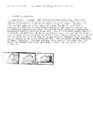
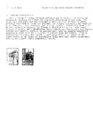
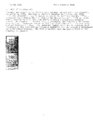
Show 15 South Main ZCMI Cast Iron Front ARCHITECTURE (continued) extremely large, eleven feet in height and varying in width from four feet to seven feet. They are covered with insect screens of modern louvered mesh in frames which match the windov/s behind. The columns are painted black, other ornament and moldings are white and background planes are gray. The first floor level which once had a columnar treatment like that above now has large show windov/s with wide spaced supports and is spanned by heavy steel beams. As the width of the store front grew the design of the cornice and pediment was changed. Below the marquee and behind the facade there has been frequent modernization, but some of the varnished pine poles remain as structural columns along with much of the original stamped metal ceiling. The store plans extensive remodeling and addition; however, the original cast iron facade will remain. 5. HISTORY (continued): ZCM-I was originally involved only in wholesale operations. Retail storee would voluntarily join the cooperative institute and thus make their goods available for distribution throughout the state. In this way ZCMI became a virtual "life-line" to Utah f s rural communities. They offered the same goods for the same prices as in Salt Lake. Within a few years ZCMI had Iif6 co-op stores in 126 of the scattered settlements in the territory. Brigham Young said, with regard to thepurpose of ZCMI, "It is our duty to bring goods here and sell them as low as they can possibly be wold and let the profits be divided with the people at large."" ZCMI, from its inception, wa.s "an immediate and outstanding financial success."7 In 1870, "The Big Boot" shoe factory was opened and in!872, a clothing factory, supplied with fabric from Provo Woolen Mills, was added. This venture into manufacturing was a success which has continued well into the 20th Century.o ZCMI now has six branch stores; three in Salt Lake City, one in Logan, Provo, and Ogden. Because ZCMI was orgaiized so early in the history of the state (1868), its growth parallels the growth and development of the state of Utah. The present ZCMI storefront may best be described as an architectural sciilpture. The old facade' and its additions were dismantled, restored and reconstructed on a. new building- after the original store was razed. Willi^ Folsom andO "ted Taylor, pioneer architects, designed the original facade which, though not the oldest, was the largest iron facade built in Utah. The use of cast iron as an architectural facade and structural system was innovated in the early 18*fOs ^J James Beaugards of New York. Some thought the new system was fireproof, but its greatest advantages were its modular^ and ability to provide more open space and light by eliminating the need fci masonry walls. The First National Bank, built in 1871 and designed by New York f s Richard M. Upjohn, has Utah's oldest known cast iron facade. The Mormon architects of the ZCMI storefront had both traveled widely through the country Folsom to the East and Midwest and Taylor in San Francisco where the use of cast iron was opoular. Folsom ha.d earlier proven himself as an innovator in his fireproof Amussen ! s Jewelry (1869) and Salt Lake Tabernacle (1867). Due to difficulties associated with local iron product cast iron facades were very rare in Utah. Fortunately the classically ornamented ZCMI facade remains to document an important developmental peri in American and Utah architecture. (From Historic Utah, Inc., Historical and Architectural Sites Inventory, Salt Lake City, 1977-1978, Site #5.) |