| OCR Text |
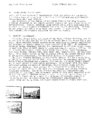
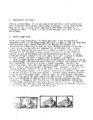
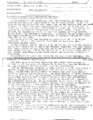
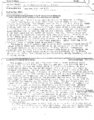
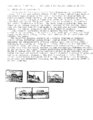
Show CJ» O ^uth Main First National Bank ARCHITECTURE (continued): the tops of the window bays, perhaps to serve as sun screens. This gingerbread has been removed, but the iron fencework across the porch and bottom of the third story remain. The cornice, complete with pinnacles and arched pediment, likewise are intact. All of the ironwork, is painted white and is very striking in its effect. While the ground floor has been adapted in use as a threatre, the two upper floors are essentially intact in both plan and fabric. The fancy v/ooden stairways, doors, Y/ainscoting and mouldings are nearly all preserved, as are the original glass-paneled partitions in the old Masonic Library, and the heavily classical plaster cornices and centerpeices. The second level and part of the third level are being used for offices but the main assembly room on the third floor is vacant. Although altered somehwat, the First National Bank Building is still replete with unusual detailing, is visually interesting, and has great educational value and restoration potential. 5. HISTORY (continued): and cast iron bank as a permanent investment. The iron front was designed by Richard M. Upjohn of New York who, in 1870, also designed St. Mark's Episcopal Cathedral in Salt Lake City. Built concurrently with the bank 1 s greatest years of success, 1871-1872, the expensive structure may have contributed to the bank's demise in 1873. The estimate of construction, $80,000, was far exceeded by the actual cost, $140,000. In addition, liberal loaning policies coupled with a slump in mining and business activit related to the Panic of 1873 proved too much for "Hussey's bank." The bank was unable to meet heavy withdrawals and suspended payment in September, 187 The bank was involuntarily liquidated in December 1874; the official reason for the failure: "incompetent management." Hussey was forced to leave Utah in 1874j one year beforea fire burned, the roof and upper story of the bank (November 17 5 1875). Hussey continued banking in Colora.do and Montana, Idaho, Washington, and-NewYork (1880-1883). He was "Utah's first banker of consequence." At the time of the fire in 1875 the bank's first floor was occupied by the Deseret National Bank. This bank evolved from Hooper, Eldredge and Company, the firstfinancial house in Territorial Utah, later to become the Bank of Deseret with Brigham Young as president. The bank obtained a charter in 1872, became the Deseret National Bank, and apparently moved into the building after the demise of the First National Bank, At about this time Walker Brothers became ownersof the structure. More famous as a mercantile firm, Walker Brothers had carried on an unofficial banking busine since 1859. They acquired the bank building as an investment and did not do business in it themselves. It is clear that many pioneer companies vied for office space in the prestigious four-story structure. Among the early patrons were the Stock Exchange, Flagstaff Mining Company, Huge and Jonasen (attorneys),Patrick Brothers, Mr. Ball (receiver of the FirstNational Bank),C. M. Carter (attorr Wells, Fargo Company, Atlantic and Pacific Telegraph Company, officesof Supreme Court Justice Sutherland and his associates. After the fire of 1875 the bank was immediately repaired but no attempt V;SG made to rebuild the upper story. Instead, a nev;, flat roof was built over the third floor and a nev/ pediment or parapet \vall was built across the front facade. The renovated bank then became the new home of the Mason: lodges of Salt Lake City, the upper floor being dedicated for Masonic rmrposes November 14, 1876. The Masons had previously met with the Inde^endent Order of Odd Fellows (IOOF) in a rented room in Trowbridge 1 s Building, After leasing the two upper floors of the bank, the Masons |