| OCR Text |
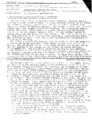
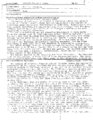
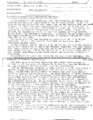
Show South Main Utah Savings and Trust Company Building (3) 5. HISTORY (continued): addition he was a member of the influential Alta Club, the Knights of Columbus, and the Elks Lodge. W. J. Halloran's career exemplified his pet phrase, "There is no such word as fail." William Montague Ferry became involved with the Utah Savings and Trust Company as a. director in 1906 and became vice-president about 191*t-» He was elected a State Senator on the Republican ticket in 1912, advocating bills designed to relieve the aged indigent, to provide for orphaned and destitute children, to protect children from unjust labor conditions, and to provide adequate wages and proper working conditions for women. He was a. director of the Walker Brothers Bank, director ofthe Silver King Coalition Mines and the Mason Valley Mines of Nevada. The Utah Savings and Trust Company Building, erected in 1906-1907, is architecturally significant as a well-preserved example of a local variety of the Sullivanesque Style, and as oneof Utah's earliest commercial building to utilize a. reinforced concrete structural system. The architects, Ware and Treganza. ofSalt Lake City, were a prominent firm which during its 25 year partnership produced some of the state's finest building designs, Thei use of brick infill and metal window sashed and trim on the exterior of the building is evidence of an early attempt at "fireproof" construction. The development of the use of concrete in Utah has an interesting history As early as the 1850s Mormon pioneers were constructing forts of"mud concret a. combination of rocks, dirt, straw, water and sometimes other elements whic were poured into crude wooden forms to create thick walls. By the 18?0s Morgan Richards of Iron County had developed a "lime concrete" by adding to the aforementioned materials lime as a hardener. Using methods similar to those described in Orson Fowler's books on the "gravel wall" mode of constuction, Richards built impressive poured concretestructures in Para.won and Paragonah, Utah. By the 1890s Portland Cement made its appearance in Utah. Its early uses were confined mostly to flatwork, foundations and water pipes until after 1900 when the structural uses of concrete developed in France, Germany and the Midwest and Eastern United States became known. The pivotal figure in the development of reinforced concrete in the Unite States was Ernest L. Ransome. His first patents wereissued in the decade of the 1880s following William LeBaron Jenny's development of the "first skyscraper," the Home Insurance Building in Chicago inl87i§, By 1900 Ransome was the leading designer of industrial and commercial buildings of reinforced concrete. The stateof conventional column-and-bearn framing in the first decade of the century was largely thework of Ransome. Typical of his commissions at the time is the United Shoe Machinery Company at Beverly, Massachusetts (1903-1905). The floor slabs and joists were poured as a unit, the joists thus forming parallel ribs of rectangular sections, the whole resting on deep girders spanning between the columns in both directior Ransome's principle of reinforcing construction was simple by contemporary standards but was fundamentally sound. Ware and Treganza used essentially the same system in their Utah Savings and Trust Company Building although il is not known how the architects, both newcomers to Utah, became familiar with the method. Nevertheless, their structural design shows an early use of Ransome's principles and documents a beginning effort in "developing the reinforced concrete technology being used today. |