| OCR Text |
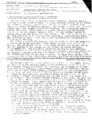
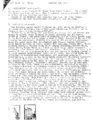
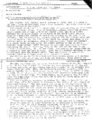
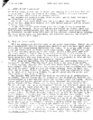
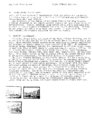
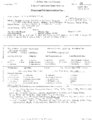
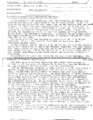
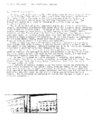
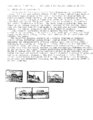
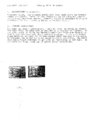
Show 1?35 South Main /+. Utah Savings and Trust Company Building (1) ARCHITECTURE (continued): a band of voussoirs alternating with heads of grain* The final cornice projects far beyond the face of the building and features dentils, brackets and lion's heads. The original flagpost, located above the center of the cornice, is still extant. Structurally the Utah Savings and Trust Company Building consists of reinforced concrete skeletal frame. Square concrete columns, roughly two by two feet, were built up in a modular pattern, one floor at a time. Concrete beams and floors were then set upon each level of columns. The open spaces between the columns and beams werefilled with brick. Reinforci of the system was done by placing gangs of one inch steel bars through the columns and beams. Some of the bars were taken through to the outside walls where they were cut off flush with the walls and are now exposed. Forming of the concrete members was done with wooden planks and the form marks are still evident, except in the light wells where the concrete was parged. The site was excavated by horse and team. Overall, the construction of this building represents a pioneering effort, using primati methods to execute modern ideas of the time. In plan the building has a rectangular shape on the first floor while the upper floors have offices fenestra.ted by three light wells located on the southern side of the building. The interior is quite simply appointed, the columns and beams sometimes being exposed and decorated with egg-and-dart bands and other classical motifs. The stair railings, newel posts and the trim of door and window bays utilize both metal and wood. The interior of thefirst floor has been altered extensively and to a lesser extent the upper floorshave also been modified but retain the original floor plan. The architectural interest of the building rests mostly with its structural system and the design of the front facade. 5* HISTORY (continued) was also one of the founders of the Alta Club, when it was organized in 186 as a. social and service club for gentile businessmen but gradually came to admit Mormons to membership and served as an important instrument of accommodation between the. Mormon and Gentile population of Utah. He also owned the Dooly Block which ranked as the "Business Building Showcase" in downtown Salt Lake when itwas built inl892. Designed by Louis Sullivan, or of America's most celebrated architects, it was the only remaining example of Sullivan's work in the v/estern United States when it was demolished in 1972. Dooly established the first bank in the city of Ogden, Utah, under the name of J. E. Dooly and Company during his employment with Wells, Fargc and Company. V/. S. McCornick served as president of the Utah Savings and Trust Compar beginning in the year 1899, following Dooly 1 s term. McCornick was a class: entrepreneur whose business successes mirrored the history of western econc mic development. Originally from Canada and then California, McCornick responded to the lure of the Comstock lode in Nevada where he lived until 1873* It was in. Nevada that McCornick 1 s interest in mining was aroused when, during his development of a lumber supply business he inadvertently tapped several Nevada mines which produced the basis of his fortune. McCornick settled in Salt Lake City in 1873 where he established a small banking house. McCornick and Company gradually grew to be the largest private banking house between the Missouri River and the Pacific Coast. Around 1887 McCornick began to participate in some of the largest and most successful mining ventures in the state, namely the Silver King, Daly and the Daly-West in Park City and several of the Eureka and Mercur mines. Later he became president and principal owner of the Giant Raft River Land |