| OCR Text |
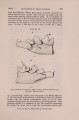
Show 476 MR. G. A. BOULENGER ON THE [APr- 1^, Procolophon, according to Broom*, has 2.3.4.5.? phalanges in the hind limb. Huxley restored the foot as with one large proximal and four small distill tarsals f. Broom, in Procolophon, has found two proximal elements-tibiale fused with intermedium, and radiale-and four distals. In Telerp>eton there appears to me to have been two bones in the proximal tarsal row, or if there was but one it shows a distinct trace of the fusion of two. The difference between the foot of Telerpeton and that of Procolophon would therefore be restricted to the shape, the former being longer and more slender than the latter. In concluding this review of the characters which can be safely ascertained on the material with which I have been entrusted, I must add that I have failed to find any traces of "abdominal ribs," and I feel certain that if any vestiges of a plastron existed these must have been extremely slight. Broom, however, has found impressions of a series of plastral bones, apparently in the posterior abdominal region, on one specimen of Procolophon +. AFFINITIES OF TELERPETON. Having reached the conclusion that Telerpeton is closely related to Procolophon, it is of course unnecessary to consider its supposed Lacertilian affinities. Nor should I have thought it worth while to give reasons for its not being a Rhynchocephalian, had not Dr. Broom § recently revived the opinion once held || but since abandoned by Seeley, that Procolophon should be referred to that order, or at least " somewhere among the primitive Rhyncho-cephalians,- possibly not far from Palceohatteria," a view which has been endorsed by Prof. H. F. Osborn %, in whose Classification a new Superorder, Diaptosauria, is established to include the Rhynchocephalia of Zittel, the Pelycosauria of Cope, the Progano-sauria of Baur, and the Procolophonia and Mesosauriaoi Seeley**. The thecodont dentition, the absence or great reduction of the plastral bones, and especially the presence of ossified prascoracoids, are characters which are opposed to an association of the Procolophonia with the Rhynchocephalia, whilst in these characters, as well as in the general structure of the skull, they agree with Pariosaurus and Sclerosaurus ft, which, together with Elginia, constitute the group Pariosauria, united by Cope and by Osborn with the Cotylosauria. The Order Cotylosauria was proposed by Cope in 1880 JJ as a division of the Theromorpha, to include the Diadeclido', on the * L. c. p. 22, pi. i. fig. 6. f L. c. p. 78, fig. C. X L. c. p. 21. § L. c. p. 24. || Quart. Journ. Geol. Soc. xxxiv. 1878, p. 803. •jf " The Reptilian Subclasses Diapsida and Synapsida and the Early History of the Diaptosauria," Mem. Amer. Mus. i. p. 451 (1903). ** Prof. Osborn's arguments have failed to convince m e of the soundness of his view that the Mesosa uria have nothing to do with the Nothosauria. Neusticosaurus, which he places in the latter group, certainly shows decided attinity to Mesosaurus, and I cannot see any fundamental difference in the rib-articulation of the two types. ft Aristodesmus Seeley (Labyrinthodon ruetimeyeri Wiedersh.). XX Ainer. Natur. xiv. p. 304. |