| OCR Text |
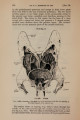
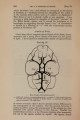
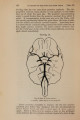
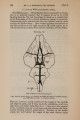
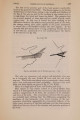
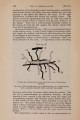
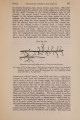
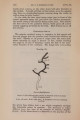
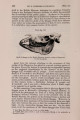
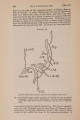
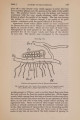
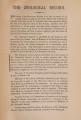
Show 1904.] OF THE BRAINS OF MAMMALS. 185 symmetrically on either side a middle cerebellar artery. Each artery has two main branches. Here again tlxe blood-supply to tlxe cex-ebellum from this artery must be very small. In the second and less pex-fectly injected brain a small branch on either side arises behind the middle cerebellar, which m a y be one of the bx-axxches of the posterior cerebellar advanced rather forward. Between the middle cerebellar and the bifurcation of the basil.u artery to form the circle of Willis ax-e three or four transverse arteries, of which one pair are particulax-ly well marked in both specimens. Immediately after the bifurcation of the basilar ax-tex-y arise the anterior cex-ebellar ax-tex-ies, which are stout arteries axxd of as gi'eat calibx-e as any given off fx-onx the circle of Willis. They constitute the main if xxot tlxe only blood-supply of tlxe cex-ebellum. The third nerve sepax-ates this artery fx'onx the posterior choroidal, which is of less calibre. Betweexx this artery and tlxe postex-ior cex-ebx-al ax-ises an artex-y of about the same dimensions which is axx adjunct of the latter, and on the right side of one specimen ax-ises in common with it fx-onx tlxe cix-cle of Willis. Tlxe posterior cerebral artery is of tlxe same calibre as tlxe othex-cerebx- als and tlxe anterior cerebellar. Tlxe circle of Willis is long and naxrow, relatively speaking. About halfway between the posterior- and middle cerebral arteries, exactly on a level with the pituitary body, the very slender ophthalmic arteries join the circle. The dimensions of these arteries are not greater than those of some of the more ixxconspicuoxrs branches of the basilar artery; but as both specimens were identical in this particular, I take it that tire state of affairs is normal. Just before the origin of tlxe middle cerebral arteries arises a small artery on either side supplying the temporal lobes of the cerebrum. As this vessel occurred in both brains, I take it to be of some little importance. The middle cerebi-al artery supplies, as will be seen from the drawing (text-fig. 16, p. 184), the greater part of the cex-ebx-al henrispheres. Tlxe anterior cex-ebx-al ax-teries are unconnected by any anterior communicating artery, but apparently pass into one in the region of the corpus callosum, thus completing the circle. In tlxe allied Lctgostomus trichodactylus tlxe characters of the brain arteries appear- to m e to be tlxe same in all essentials. Tlxe ophthalmics and the anterior spinal ax-tery are minute. This brain, however, enables m e to ascertain one point which is very possibly tlxe same in Chinchilla, but which I was not able to elucidate in that rodent. Ixx Lctgostomus tlxe anterior cerebral ax-tery of tlxe left side divides at once into two large and equisized branches, of which tlxe outer supplies the under surface of the anterior lobe of the brain, whilst tlxe othex- plunges into the inter-hemisphex- al sulcus, and is the main anterior cerebral trunk. It soon divides above the corpus callosum into two branches. In Chinchilla it is also apparently tlxe left branch only which supplies the (in this case single and median) anterior cerebral artery; but a break in the right branch supplying the under surface of the hemispheres does not allow m e to speak with absolute certainty. |