| OCR Text |
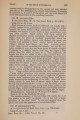
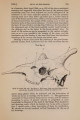
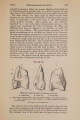
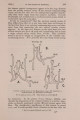
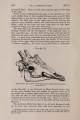
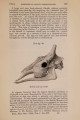
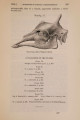
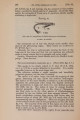
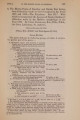
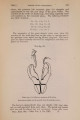
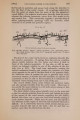
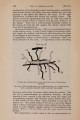
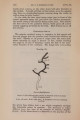
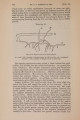
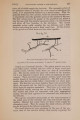
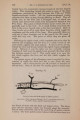
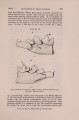
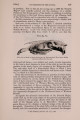
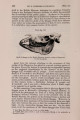
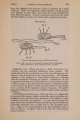
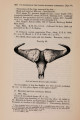
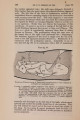
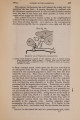
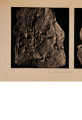
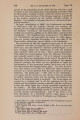
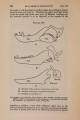
Show 1904.] AND MARKINGS OF THE QUAGGA. 427 in question. Nor is this all, for so long ago as 1880 Dr. Forsyth Major* had actually pointed out the existence of a similar feature in two living species of the family, in addition to noticing its occurrence in the fossil Equus stenonis of the Pliocene beds of the Val d'Arno, and its somewhat later ally E. quctggoides. In this connection I myself have to acknowledge a similar lack of acquaintance with Dr. Major's observations. Last year, in the columns of ' The Field,' I directed attention to the occurrence of a vestige of the Hipparion's face-pit in the skull of an Indian domesticated Horse in the collection of the British Museum. A side view of this skull is given in the accompanying text-figure (84), from which it will be seen that the Text-fig. 84. Side view of skull (without lower jaw) of Domesticated Horse from India, showing rudimentary face-pit. lachrymal pit forms a very shallow and nearly circular depression in the bone a short distance in front of the orbit, in just the same position as the much deeper pit occupies in the Hipparion skull. The only other skull of a domesticated Horse in which I have noticed a similar depression is that of the well-known racer " Bend Or," in which it is still shallower. From the occurrence of the feature in question in these skulls, both of which probably belonged to horses of Eastern origin, and its entire absence in all the skulls of the Prehistoric European horse, I have ventured to suggest that the "blood-horse," unlike the " cold-blooded horse " of Western Europe, m a y possibly have been the descendant of Equus sivcdensis. Nor do I think this suggestion in anywise weakened by Dr. Major's earlier discovery of a rudiment of the face-pit in the European E. stenonis, since it had apparently disappeared in the Pleistocene horse of Western Europe. As regards the aforesaid observations of Dr. Forsyth Major, which lead up to the main object of the present communication, it is stated in the passage already cited that the figure of the skull of the Quagga given in de Blainville's ' Osteographie,' genus Equus, pi. iii., displays a distinct vestige of the pit for the face-gland. Inspection of the plate fully confirms this statement. Struck with this remarkable peculiarity, I examined the Quagga's * Abb. Schweiz. pal. Ges. vol. vii. p. 140. |