| OCR Text |
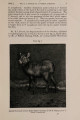
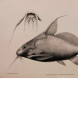
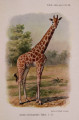
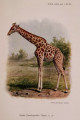
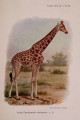
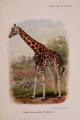
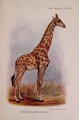
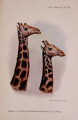
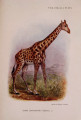
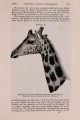
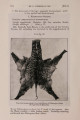
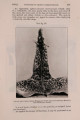
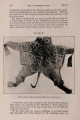
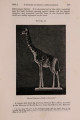
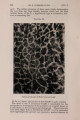
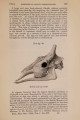
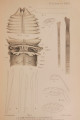
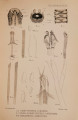
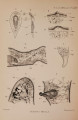
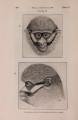
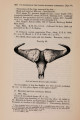
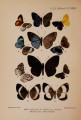
Show 202 MR. It. LYDEKKER ON THE [Feb. 2, 5. On the Subspecies of Giraffa camelopardalis. By R. LYDEKKER. [Received November 27, 1903.J (Plates IX.-XVL* and Text-figures 23-37.) The bringing of tlxe present communication to tlxe notice of the Zoological Society has been to some extexxt an almost involuntary act on m y pax-t, and due rather- to tlxe force of circumstances than to any desire to add to the burden of zoological nomenclature. Some time ago the British Museum received tlxe skins of a pair of giraffes which had been shot by Major Powell-Cotton in East Africa, axxd ax-e now mounted and exhibited to tlxe public ; and it became m y duty to give them names. As is well known, tlxe recognitioxr of distinct forms of Gix-aff'e is no new event. Mr. de Winton, in a communication to tlxe Society t some years ago, recognised two species and one subspecies from the northern, eastern, and southern districts of the African continent, namely Giraffa camelopardalis, G. c. reticulata, and G. capensis. Later on Mr. Thomas + regarded reticulata as a distinct species, and relegated capensis to tlxe rank of a race of camelopardalis. Two other forms have also been descx-ibed by Dr. P. Matschie fx-onx East Africa. I found myself unable to identify tlxe Museum specimens with any of these named fox-ms, stricto sensu. Consequently a revision of the whole group was necessary. With some ti'ouble I have succeeded in obtaining a collection of paintings and photographs of these animals (which I intend to px-esent to the Museum) such as I think has never previously been brought together. And I may here express m y indebtedness to our President fox- his liberality in defraying the cost of these paintings. I have previously given a preliminary account of some of the new forms, now more fully described, in a popular journal §, but the acquisition of yet other specimens by the Museum has induced me, largely owing to tlxe advice of m y fx-iend Mi-. Thomas, to lay the l-esults of m y investigations before the Society. I may add that whatever may be tlxe general opinion as to the advisability or otherwise of naming local subspecific forms of animals, there is an instance precisely analogous to the present one in the case of tlxe Bonte-Quagga, or Burchell's Zebra (Equus burchelli); and that if the local phases of the latter are thought worthy of recognition, most certainly the same recognition should be accorded to the local forms of Giraffe. But I may go further than this and add that, so far as I know, whereas the local forms of the Bonte-Quagga are distinguished solely by colour and markings, most, if not indeed all, of the subspecies of Giraffe are distinguishable by cranial differences. Nor is this all, for one of the * For explanation of the Plates, see p. 227. t P.Z.S. 1897, p. 277. J Ibid. 1901, vol. Ii. p. 171. § ' Animal Life and the World of Nature,' vol. ii. p. 78. |