| OCR Text |
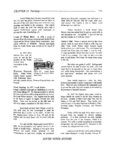
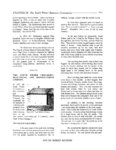
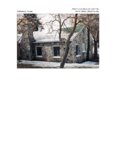
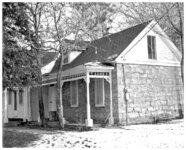
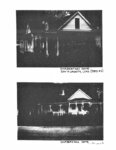
Show CHAPTER 24: The South Weber Business Community-------in fruit growing in South Weber. James was born in England in 1856, a son of James and Elizabeth (Hannah) Harbertson who came to Utah in 1874 and settled in Ogden. The Harbertsons then moved to South Weber where they purchased land and engaged in farming. James spent the rest of his days on his fruit farm. He died in 1910. In 1874, Mr. Harbertson married Miss Elizabeth Taylor who was the daughter of Robert and Elizabeth Taylor of Northumberland, England. Twelve children were born of their marriage. The Harbertson family was always active in The Church of Jesus Christ of Latter-day Saints. He was a High Priest, a bishop'S counselor for eighteen years, and filled a stake mission. He also served as a school trustee for a time and cooperated earnestly and effectively in furthering every plan or measure for the general good or advancement of the community along material, intellectual, social, or moral lines. ******** THE SOUTH MERCANTll..E, COMPANY. WEBER CREAMERY, AND MANUFACTURING In 1895 the South Weber Creamery, Mercantile, and Manufacturing Company was organized for the purpose of collecting milk products from the settlers and redistributing Figur~ 501 . South W~ber Cr~~ry. them on the open market. (For details see "A Creamery," under South Weber Farming.) TRA VELING SALESMEN. In the early years of the rural west, traveling merchants were welcome persons because most small corrununities had no stores, and these men not only sold the goods required by housewives but, in 391 addition, brought contact with the outside world. In those days strangers were not feared as much as they are now. Then the first question asked was, "Have you had breakfast?" or "Have you had dinner?" Hospitality was a way of life in rural America. In the days before the automobile, South Weber used to be visited by the Watkins Man, the Raleigh Man, the Jewel Tea Man, and the Medicine Man. They all drove white topped buggies drawn by teams of horses. Some families used to put the traveling merchants up for the night, feed their horses, and serve them both supper and breakfast. As payment, before departure for other locations, the lady of the house might be given a bottle of perfume or some other desirable item. The traveling men usually slept in their own buggies. In cold weather, before retiring, they would sit by the fireside chatting with the people of the home in which they stayed, and in summer they might spend a few pleasant hours on the porch discussing their travels with interested listeners. Most traveling men made the circuit about every three or four months. In their buggies, they carried all kinds of spices, vanilla, lemon, flavorings, coconut, pie fillings, liniments, and salves for both humans and animals. They even had treatment for hogs with worms, balm for sick calves, and disinfectant for horses and cows which had been cut with barbed wire. The children always loved to see them arrive because the youngsters were sure to be given a treat of some kind, usually a piece of gum. In addition to the traveling salesmen mentioned, there used to be an old Jewish gentleman - one whose name the residents of the town cannot recall - who visited the housewives of South Weber every summer. He drove a long-bodied buggy drawn by a single horse, and he sold dry goods. The children used to love to hear him talk - his accent was such that he never pronounced his W's clearly. "It's all vool, it's a yard vide, " he would say as he described a certain piece of cloth. He carried all the sundries a housewife could ever want: needles, pins, safety pins, hat pins, sewing thread, and buttons. He even carried pots and pans. SOUTH WEBER HISTORY |