| OCR Text |
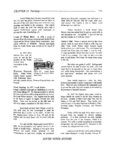
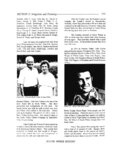
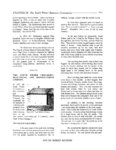
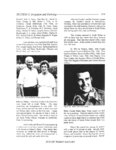
Show CHAPTER 10: Utilities ~~ L-v\ t '\4'O t1,. et('&-l-s,t""l ~~~ 131 tt:> bu:tl~ J:tM air base in Utah. The site selected was just to the east of the Ogden Army Arsenal. As a result, Hill Air Force Base (HAFB) came into being. One of the questions asked in the development plan was how the need for water was going to be satisfied . The obvious answer was to tie into the HarbertsonArsenal line. This they did with a six -inch pipe which was later replaced with a twelve inch conduit. HAFB has since expanded to the point where even the twelve-inch line will not satisfy demand. The base now obtains water from "Weber Basin." In 1942 a South Weber claim for water ri ght s was made on Military Springs, a natural spring loca ted at the mouth of Weber Canyon on the south side. At that time a culinary water line was extended from the springs to South Weber. Many scouts and South Weber residents carried cement and sand on their backs up sheer canyon cliffs to build and rei nforce the reservoir. In 1960 the Bureau of Reclamation drilled a three-mile tunnel through the mountain from Mountain Green to South Weber. This project caused a decrease in Military Springs output and State health officials, anticipating the fact that it would become easily contaminated, closed it out as a source of South Weber water. The Weber Basin Water Conservency District which was to manage the new pipeline agreed to give treated water to South Weber in exchange for the Military Springs water. In regard to the history of the Weber Basin Hill, a resident of the East Bench was crushed to death when a caterpillar slid from a truck. He was only 38 years of age. In 1968 the citizens of South Weber living on the west end of the South Weber Road made a bid to bring culinary water to their end of town. That time there was no opposition. Each home owner gladly paid $300 for a hookup. Through the efforts of David Bouchard of South Weber a deal was made with Roy City to buy their abandoned sixinch pipe. It cost the citizens of South Weber only $1,000 which was paid for by trading sand Figure 156. David Bouchard. to the City of Roy. There was enough pipe to extend from 475 East to the mountain. From 475 East westward on the South Weber Road there is a four-inch pipe which eventually reduces to a two-inch line. 9 With the increase in South Weber population came a requirement for more water. To satisfy that need a 100,000 gallon reservoir was built on the hill to southeast of town. In 1970 a second reservoir with a 200,000 gallon capacity was constructed. In June of 1969, the County Commissioners, after holding a public hearing passed a resolution to form the South Weber Water Improvement District, and shortly thereafter plans were drawn up to develop a pressurized secondary water system for the city . Water Conservancy District, the project was started by Ward Holbrook, a legislator who revived a Federal study and persuaded Davis, Weber, Morgan, and Salt lake Counties to propose to the Federal Government a system to send excess water from the Weber Basin to cities along the Wasatch Front in Davis and Weber Counties. It took twenty years to build the project after iL<; authorization in 1949. The system includes six reservoirs, twenty-two storage reservoirs, and miles of pipeline. And although South Weber does not rely heavily on Weber Basin as a primary source of water the City does procure water from that SOurce. The plan chosen involved the construction of a reservoir and pumping station at the northwest comer of the Edmund Ray property adjacent to the South Weber Di versi on Canal. And, as with many industrial projects of this magnitude there arc sad tales of disaster. In 1961 while helping Weber Basin backfill around wells which had been drilled in South Webe.r, Mr. John On 26 August From 1rrigation DilCJuS. 1975, at 7:00 p.m. , South Weber City conducted a publi c hearing in the Cultural Hall of the local LDS Church to meet the citizen participation ponion of an Figure 157. Peopk Ona Drtllllc |