| OCR Text |
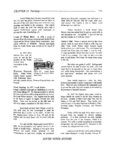
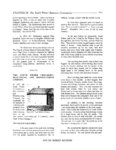
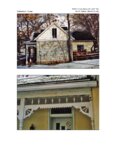
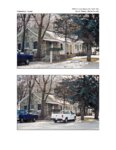
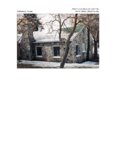
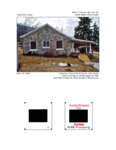
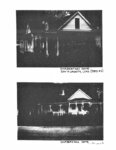
Show _"",'<J 17: Roads, Bridges and Ferry Service---------- On J~uary 6, 1855, James Brown received to build a 'good, durable, and substantial the Weber River and he was to receive r_' .. 'v'~- back by charging a toll. He was given . as to the width, railing, timber used, etc. He had to file bonds of $5,000 dollars w'ould do his work according to specifications said road in good repair. .6 One can make a fair estimation of just how and substantial that bridge was from the of another bridge which was built about time. ·The first bridge over the Ogden built by a man named James Brown. It $2,000. It contained mud, wet brush, and as fill between the logs. A few years later in . the East Weber River bridge was built by a (can't find first name). Jacob was so of his accomplishment, he said, 'My structure I built it will stand as long as the mountain which it is built lasts . ' One person responded hoped Brother Jacob, who sang the praises of lily, would not be confronted by any disaster . • The bridge described here as the Jacob was at the very mouth of Weber Canyon. It replaced with a metal bridge, which was in mately the same place. The remains of the bridge can be seen by driving toward Weber on the road which leads to the Weber Basin Center. At the ri ver look up the canyon to ah<.)ut fifty yards. (See the picture above.) One can easily why the Bridge Was at the mouth of if he first 1lnr.1~ that the north-and-south_ route (that is thl:' ~()ing north tn uno south to Suit . past the mouth (If .• ber Canyon Fig ure 332. Driving on South Webu Road. . " tho foothill s "lit of Salt Lake City into •. . ol tflli. Ct!ntt!rvilk . '" :I'hi Farmmgton, and up the . , . ... once referred ! . ifhway 89) h ,\ :IS the Mountaln Road (no t ILl.) d h. ,I e~ plI., ! I'resent-day Hill Field Road, ~ n t c properties \f':I.mily . .• th W · 1" \'scl1tl y owned by the Morgan ~~ " Il l) e ell \ . ~: ' ' antily, in front of the o ld ~ " 6 • 273 Harbertson Home (now owned by' the Weber Basin Job Corps), and then passing in front of the presentday Job Corps Center, and then across the Jacob Bridge to Ogden, or before reaching the Jacob Bridge, turning up the canyon on the south side of the river to Horseshoe Bend, across the Strawberry Bridge and into the town of Morgan. That was originally the main trail used by the Indians. It was only natural for the settlers to use the same route when they came into the area. Why break a new trail when one already exists? The two bridges at the mouth of Weber Canyon were owned and operated by toll, first by Me. Jacob and later by David Bybee. WEBER RIVER FERRY SERVICE After the Jacob Bridge washed out in 1856, Wilson Arave ·operated a ferry across the Weber River just below the mouth of Weber Canyon and east of Uintah. The ferry was finally replaced by a toll bridge which was erected in 1862. It cost 25 7 cents for a person to cross ... • Sometime before 1869 the bridge had become state owned and operated. 8 At that time the toll was supposed to have been removed. DA VID BYBEE BRIDGE David Bybee, who built and operated the bridge which was constructed in 1862, is known to have collected $750 dollars III gold coins from General Conner's Army for allowing them to cross over on their way to Cache Valley to prosecute a war against Figure 333. Road Maps Were Rare [urns in the Early Days oj Driving Cars. the Indians. It appears the Bybees were still in control in 1897 because those who used the bridge when coming from the north often complained about having to pay Mr. Bybee to pass over on their way to the South Weber Amusement Hall. There is a contradiction here and there does no t seem to be sufficient information avaiiabJe to clear it up . On the one hand, the documenta ti on on |