| OCR Text |
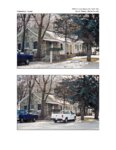
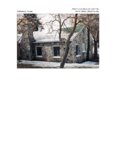
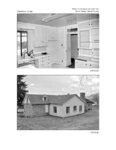
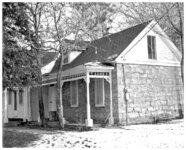
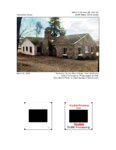
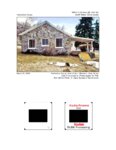
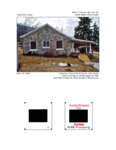
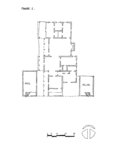
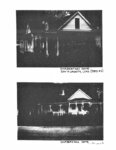
Show OMS No . 10024-00 18 NPS Form 10-900-a Utah WordPertect5. 1 Format (Revised Feb. 1993) United States Department of the Interior National Park Service National Register of Historic Places Continuation Sheet Section No. 8 Page __5__ Harbertson Home, Davis County, UT As government property, the house has been used for various purposes. During World War II, the house served as living quarters for troops assigned to guard the spring on this property which was known as Military Springs. II The military used the house for an officers country club and resort at other times. In 1965 the Air Force designated the land as the site for the Weber Basin Job Corps Center. Administration of the Job Corps center went to the u.S. Bureau of Reclamation (BaR), which has provided supervisory personnel and maintenance since establishment of the facility. As part of the Job Corps Center, the house again served as a residence for directors and employees of the organization. Subsequently, it has served as main administrative offices for the center. This house is architecturally significant as one of only a very few Temple Form house type buildings constructed in Utah. Of the documented structures in Utah, only .4% are Temple Form type. Of that .4%, or 272 structures, only 7 are located in Davis County. The Harbertson House is one of only three houses identified in the state to have a door centered on the gable facade and two side wings. The other examples are the Alma Staker House in Mount Pleasant, and the John B. Kelly House in Salt Lake City, both listed in the National Register of Historic Places. 12 The central section of this house is basically a double-cell plan with wings on both sides. A projecting gable such as the one on this house is the common, midnineteenth century, Midwestern adaptation of the pedimented structures with columned porticoes of the Northeast. Its Eastlake style porch, fishscale shingled south gable, and use of various materials, add Victorian Eclectic stylistic features, relatively unusual for a Temple Form stone structure. See continuation sheet 11Jones, Deena. 12 Ogden Standard Examiner Lakeside Review. June 26 , 1990. John B. Kelly House nomination. Research as of 1983 in Utah identified three major types of the temple-f orm house, each having several subtypes. These are: Type I ident ifi ed by a gable facade, a side passage, and a door on · the main gable, with or without one or two wide wings; Type II identi f ied by a gable facade, a two cell plan, a door centered ont he nEin gable, with or without one or two side wings ; Type III identi fied by a gable facade, a two cell plan, and one or two wings wi th the door on the wing. Some Type III houses were created by remodeling an ex istent structure. |