| OCR Text |
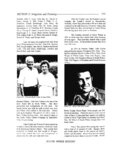
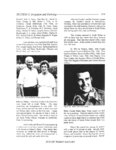
Show CHAPTER 27: Churches Other Than M o n n o n - - - - - - - - - - - 461 of the sacrament was blessed and sanctified by God, she concluded that it had to be clean no matter who drank from the cup before her, and she did drink! of mankind, that feeling is at rest - no more to come back .• 3 Later when the Mormon Church began using small but individual glasses in the sacrament services, though they solved the dilemma of having everyone drink out of the same cup, they presented a new set of problems for the South Weber Ward. George W. Kendell was ordained a high priest on 25 January 1891 and was appointed Bishop of the South Weber Ward at that time. His assistants were William P. Jones (First Counselor) and James Harbertson, Junior (Second Counselor). It is interesting that Bishop Cook had died on 5 May 1890 but was not replaced by George Kendell until 25 January 1891. Why there was such a long period of time before a bishop was called to replace Bishop Cook is not known. ANOTHER CHANGE IN THE BISHOPRlC. South Weber water was notoriously hard and over the years has caused the citizens of the town some agitation. Such was the case with the water coming out of the clay pipe at the chapel - it was very hard and left rings around the insides of the new glasses. And since as custodian it was Alice Ray's job to clean the glasses, she was often more than frustrated while trying to remove that ring. To illustrate just how hard the water was, Mattie Ray says that when she first moved to South Weber in the 1920's, she did not know about the condition of the water and she proceeded to wash and rinse her long hair in it. When Mattie tried to comb out her hair, she found there were so many snarls and it was matted together so thick that she could not get a comb through it. Someone advised her to rinse her hair with water containing two teaspoons of vinegar. She tried that and thereby solved the snarling difficulties, but she remained so unbappy with the South Weber water that whenever she got the chance, she went to Layton to her mother's home to wash her hair. Another trick used by the ladies of the town during the winter months was to melt snow and wash their hair in it. Snow water, like rain water, is so soft it requires very little soap and only a little rinsing. And since most South Weber people had rain barrels to catch water during the summer months, there was little difficulty finding rinse water. Everyone preferred washing the clothes or taking a bath in rain water, but there were those (mostly men and boys) who stuck to the time-honored tradition of bathing in the river or an irrigation ditch. A MISSION SCHOOL. In 1885 a mission school Was started which lasted for one year. Apparently there Was some dispute which gave it an early demise for Thomas Peek in his history says, ·It was a day of hberalism and there was a bitterness of feeling. Thanks te that Divine power that rules the destinies ******** GEORGE WILKINSON KENDELL George W. Kendell was Bishop of the South Weber Ward, Mount Ogden Stake, Utah, from 1891 to 1809, and for a second time, from 1910 to 1914. He was born on 21 April 1856 at Soutb Weber, Davis County, Utah, a son of William Kendell and Johanna Peek. Figurt! 568. Gt!orgt! W. Kmddl. George's father was born in Wickerslie, England, on 20 June 1828. He became a resident of Utah in October of 1854. He had been converted to the LDS Church and filled a mission in England from 1852 to Figurt! 569. William Kmddl. 1854 before sailing for the new world. After coming to Utah, he was counselor to Bishop Spaulding of Uintah from 1867 to 1877. He passed away on 12 April 1883. And speak of your ·preemies, • as premature babies have come to be known. George was so small at birth that he could fit into a one-quart bowl. His mother did not have any breast milk to feed him so he had to be wet nursed by his aunt, Jane Firth (his SOUTH Vt'EBER HISTORY |