| OCR Text |
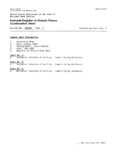
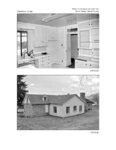
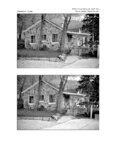
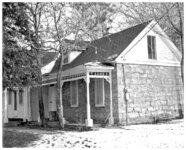
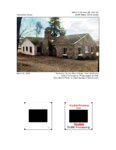
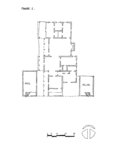
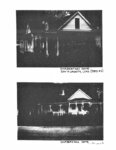
Show 8. Statement of Significance Certifying official has considered the significance of this relation to other properties: ( ) nationally ( ) Applicable National Register Criteria (X) A ( ) B (X) C Criteria Considerations (Exceptions) ( ) A ( ) B ( ) C Areas of Significance (enter categories from instructions) Social History Architecture property in statewide (X) locally ( ) D ( ) D ( ) E {)F{)G Period of Significance l886-. ~1=9~4~4~___________ Significant Dates 1886, 1922, 1965 1886 . Cultural Affiliation Euro-American: Latter Day Saints Significant Person N/A Architect/Builder James Harbertson State significance of property, and justify criteria, criteria considerations, and areas and periods of significance noted above. The home of James and Elizabeth Taylor Harbertson has significance as a fine example of Temple Form architecture of stone construction from the later 19th century, as described in section 7. Indeed, the Harbertson family became prominent building contractors in the area and constructed other houses of similar styles. The house has further significance in social history since it has served in three major functions: as a residence, as a club facility, and as an office building. Each of these functions represented major social events ongoing in the local area. First, it has been a private residence of a prosperous family prominently associated with the communities of both Ogden, Utah, and the northern portion of Davis County, Utah. They were drawn to Utah as converts to the Church of Jesus Christ of latter Day Saints which was then recruiting heavily in Great Britain. However, they were drawn to this particular area since it was a major railroad and transportation center. Indeed, the first transcontinental rail line was completed just north of Ogden in 1869 with further major links developing through the 19th century. the house. Significantly, the Union Pacific tracks run just a short distance north of Subsequently, after the U.S. military acquired it along with a large block of surrounding land, the house functioned for a period as quarters for personnel who guarded a nearby natural spring of military significance, as well as functioning at another time as an officer's club. Ultimately, the military relinquished the property to civilian government functions. The house again served as a residence for supervisory personnel, then as a main office building at a Job Corps center which now surrounds it. The Temple Form of architectural design as noted in Section 7 above was represented in Utah by a number of fine examples but none have yet appeared on the National Register of Historic Places from the North Davis County/Weber County area. Though houses of heavy stone construction are common in the area, this is one of the few if not the only one remaining of Temple Form design (Carter and Goss, 1988). (X) See continuation sheet |