| OCR Text |
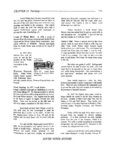
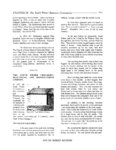
Show " SECTION 4: Utilities and Communications- - - - - - - - - - - - - Harbertson horne and farm o f South Weber and developed the natural spring which existed there . They then piped the water to the Arsenal . The route for the pipeline was from Harbertson's straight up to Sand Hill (present day Hill AFB) . They placed an outlet off the pipeline outside the chainlink fence for the use of the farmers in the area. Previous to this, in order to water their livestock, farmers had to carry water in barrels. SOUTH WEBER NEEDS. Even though South Weber was situated on a river, it was not the easiest place to fmd water for culinary purposes. Some people were lucky, they had natural springs in their yards. Others dug wells, and some well diggers were fortunate enough to drill into • surface water,· but most had to go deep. Nor was the water content always the best. It was illgh in iron, willch rusted clothing and it tasted very bad. In addition there was the problem of quick sand willch made well digging and maintenance a very dangerous occupation. Wells were often lined with cobble rock and cement, and some of them were so bounteous that they supplied a continuous stream for several families at the same time. ANIMAL WATER WELL. As we all know very well, humans are not the only crea~res on this earth who require water for survival, and getting water to the crops and farm animals has always been just as great a priority as it has for people. One ingenious farmer, rather than have to carry water to ills livestock or drive the livestock to the water, used a plow and scraper to dig out a free-flowing water well about eight feet deep right in ills pasture. The animals could then walk right up to it and help themselves. 6 The South Weber water table used to be high enough that one could dig a small pond to supply ills animals, but the water has since been so rapidly depleted that dig such a reservoir now would be an impossibility. IN-DOOR PLUMBING. After electricity came to South Weber and before the development of a water system for the town, some home owners put electric 122 pumps down their water wells and extended pipes into the kitchens of their homes thus providing inhouse water for the first time. Though this afforded only cold water, it was certainly better than having to carry water by hand from a well, irrigation ditch, or the river. But it wasn't very long before everyone had the hot water they desired. Most South Weber residents had wood-burning stoves with willch to heat their homes and cook their food, and it was only a natural addon feature to make those Figur~ J53. Ii SIOv~. stoves heat water. It dido't require any additional fuel to accomplish it either. The stove manufacturers perceived the problem immediately and solved it in a most ingenious way . They simply added a water tank right in the stove, in the firebox. In the first stove models with tills feature the water tanks had to be filled by hand, but it wasn't long before the stoves were hooked right into the cold water line where it came into the house. Whenever anyone lit a fire in the stove to accomplish any other taSk, whether it be for cooking or simply to warm the home a little, the fire heated the water in the tank. On the upper bench people very often had to carry water to their dwellings, especially during the summer. In those days everyone had a rain barrel, but that was not the inconvenience it may seem. Rain water is soft and all other South Weber water was hard. THE WORK PROJECTS ADMINISTRATION (WPA). The New Deal, as Franklin Delano Roosevelt called ills reform program, included a wide range of activities. The President described it as a "use of the authority of government as an organized form· of self-help for all classes and groups and sections of our country." At ills request, Congress appropriated $500,000,000 dollars for relief to states SOUTH WEBER HISTORY |