| OCR Text |
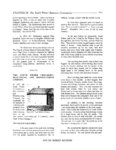
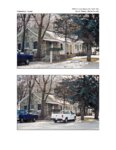
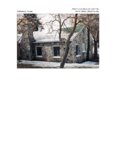
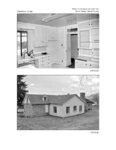
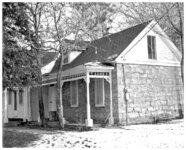
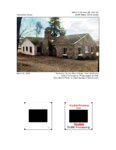
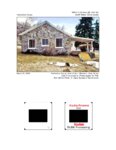
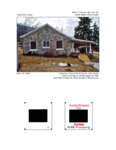
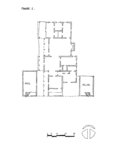
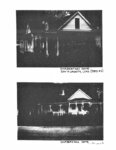
Show ceiling, the turned posts, and the shingled wall surfaces were influenced by the Queen Anne house form. The mentioned details are restrained, but such are the identifying features of a Folk Victorian residence. A seeming contradiction to the Queen Anne style but unique and clearly recognizable as a Folk Victorian house form is the near symmetric facade and the lack of varied wall surfaces and textures. While the home includes rock, stone, and brick building materials, it is the front, or west facade, that with the stucco surface best illustrates the attempts of James Harbertson to create a consistent wall surface and a symmetrical facade . The common impetus for the spread of the National Folk and the Folk Victorian house forms was the railroad. With its proximity to the railroad city of Ogden and the Transcontinental Railroad, the Harbertson Home is an exemplary example of this phenomenon. The railroads provided local lumber yards and mills with the woodworking machinery necessary for producing Victorian detailing while also expanding the market for pre-cut wood millwork from remote mills. This supply of inexpensive detailing made it possible for local carpenters to simply and easily embellish traditional folk house forms and develop the distinct Folk Victorian style. The Harbertson Home is one of, if not the only, local example of the Folk Victorian style in its purest, evolutionary state. In terms of the side-gabled, one-story subtype, the home is locally rare and especially so when the center gable is considered. Multiplying the stylistic significance is the home' s contribution as a vernacular example of the Folk Victorian style that has been essentially forced into "extinction" by the recent spread of suburban development along the Wasatch Valley. The Harbertson Home is truly unique as a local, in tact vernacular Folk Victorian house form. |