| OCR Text |
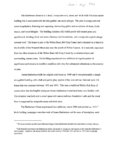
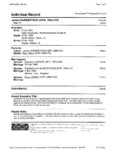
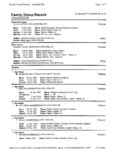
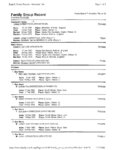
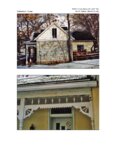
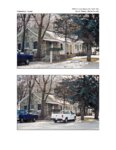
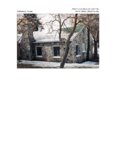
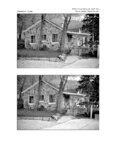
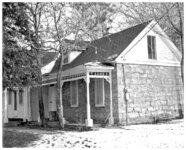
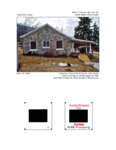
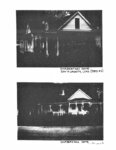
Show NPS Porm 10-900a (Rev. 8/86) NPS/CHS Word Processor Pormat (Approved 03/88) OMB No. 1024-0018 United States Department of the Interior National Park Service NATIONAL REGISTER OF mSTORICPLACES CONTINUATION SHEET Section number ___ 8 Page ___ 1 [The background on the Harbertson family primarily comes from a 1970 family history noted in Sources, Section 9, by (Mabel) Irene Harbertson Kendall who was born in June, 1897. Her account, including the extensive recording of geneo10gy as an integral part of the functions of members of the Church of Jesus Christ of Latter Day Saints, is corroborated on every point of comparison by the U.S. Census of 1900, also cited in Section 9 . The fact that this Census record was not released to the public until after 1970 is quite significant. The family history of Irene Harbertson Kendall, then, is a must be given great credibility.] James and Elizabeth Taylor Harbertson immigrated from England in 1875, soon after their marriage, when they were ages 19 and 18, respectively. In fact, Harbertson's father, also named James Harbertson, immigrated to the U.S. about a year before . Both James Harbertsons had worked in coal mines in Northumberland, England. The younger James Harbertson and his wife, Elizabeth, first resided in the city of Ogden where they had five children, but lost four at young ages. In early 1886 they purchased a tract of farm and orchard land which now includes the house from Thomas Cahoon. The older James Harbertson lived nearby, possibly on the same land, with his second wife and her two children. The younger James Harbertson himself built the house that same year where the family continued to live while raising, fruit, grain, and livestock. Here they had seven more children, all but one of whom survived to adulthood. Harbertson and his four sons subsequently developed a building contracting business, in part because of the experience building this house where the family lived until 1922 . That year the U.S. Army Air Porce, in developing Hill Air Base, made the family a most lucrative offer for their farm, including the house, which the family believed ·was too good to refuse.· As part of the extended facilities of the Air Base, the house served in at least two major functions, in addition to standing vacant for several periods. land included a spring which the military wanted for the arsenal at Hill Air Base. The During World War II, the house served as living quarters for troops assigned to guard duty for the spring which had military significance. In addition, the military .used the house for |