| OCR Text |
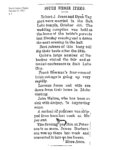
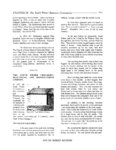
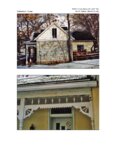
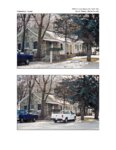
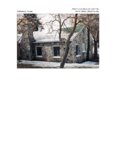
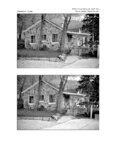
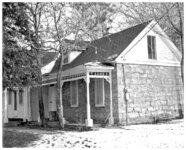
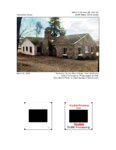
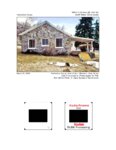
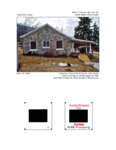
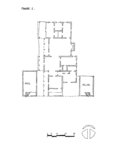
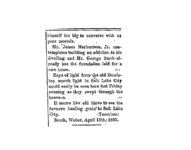
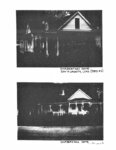
Show will be discussed in sequence according to the present integrity of the building, unless noted otherwise. The first building campaign by Harbertson consisted of "a cellar and addition to his residence from light colored sandstone brought from Peterson, Morgan County.,,3 This addition essentially "stylized" and transformed the home into an example of Folk Victorian architecture, extending the south end gable, introducing a projecting, centered front gable and a full-width porch on the west facade, along with a number of other elements of style. (See fig. 1) The south wing and the stucco west facade are the remnants of this building campaign. The south wing is of a composite grey sandstone and rock masonry construction with a wood frame end gable, the west facade is of stone construction with a spatter dash finished stucco wall cladding, and the projecting front gable is of wood frame construction with like spatter dash stucco wall cladding. The wood roof framing follows the "all common rafter" system4 and was originally covered with sawed wood shingles. The end gable of the south wing addition includes a narrow window opening and is clad in fishscale and diamond wood shingles. The masonry of the south wing addition is coursed grey sandstone on the south facade, irregular coursed rock on the east facade, and a combination of coursed grey sandstone and irregular coursed rock on the west facade. More specifically, the sandstone is used as quoins on both the southwest comer of the . structure and at the intersection of the wing addition and the original structure. It is also used in the third and fourth courses from the level of the porch. 3 "South Weber Items," The Davis County Clipper, 19 August 1904. 4 Virginia and Lee McCalester, A Field Guide to American Houses (New York: Alfred E. Knopf, Inc. , 1984) 45. |